

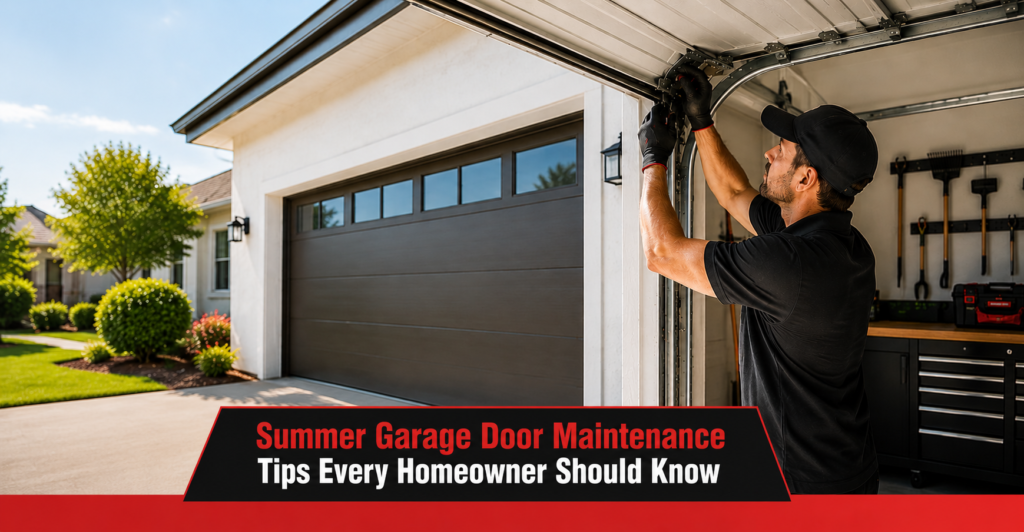
Summer is one of the busiest seasons for home improvement projects, making it the perfect time to give your garage door the attention it deserves. While many homeowners focus on landscaping, painting, or outdoor maintenance, the garage door is often overlooked—even though it’s one of the largest moving systems in your home.
Heat, humidity, dust, and increased daily use can all affect your garage door’s performance. A little preventative maintenance during the summer can help prevent unexpected breakdowns, extend the lifespan of your garage door system, improve safety, and reduce costly repair bills later in the year.
Whether you own a traditional steel garage door, a modern insulated model, or a smart garage door opener, these summer garage door maintenance tips will help keep everything operating smoothly.
Why Summer Garage Door Maintenance Matters
Garage doors experience significant wear and tear throughout the year. During summer, high temperatures can cause metal components to expand, lubricants to dry out faster, and weather seals to deteriorate.
Regular maintenance helps:
- Improve garage door safety
- Prevent unexpected breakdowns
- Extend the lifespan of springs and rollers
- Reduce operating noise
- Increase energy efficiency
- Protect your investment
- Avoid emergency garage door repairs
For homeowners throughout Illinois, especially those dealing with changing seasonal weather, routine inspections are an important part of keeping residential garage doors operating reliably year-round.
Inspect Your Garage Door Hardware
Your garage door opens and closes thousands of times every year. Every cycle creates vibration that can slowly loosen nuts, bolts, brackets, and hinges.
Walk around your garage door and inspect:
- Hinges
- Roller brackets
- Track supports
- Mounting bolts
- Fasteners
If you notice anything loose, tighten it carefully. However, never attempt to adjust or remove components connected to the torsion spring system, as these are under extreme tension and should only be handled by trained professionals.
Lubricate Moving Parts Properly
One of the simplest ways to improve garage door performance is proper lubrication.
Apply a high-quality garage door lubricant to:
- Rollers
- Hinges
- Bearings
- Springs (light coating)
- Pulleys
- Arm bar
- Lock mechanism
Avoid using heavy grease or products like WD-40 as your primary lubricant because they can attract dirt and provide only temporary lubrication.
Well-lubricated parts reduce friction, minimize noise, and help prevent premature wear.
Check Garage Door Springs for Wear
Garage door springs do most of the heavy lifting every time the door opens.
Signs your springs may be wearing out include:
- Door feels unusually heavy
- Door opens unevenly
- Loud snapping noises
- Visible gaps in the spring
- Door won’t stay open halfway
Never attempt DIY garage door spring replacement. Broken torsion or extension springs can cause serious injuries.
If you notice any of these warning signs, schedule professional garage door spring repair before the problem becomes an emergency.
Examine the Garage Door Rollers
Rollers allow the garage door to move smoothly along the tracks.
Inspect them for:
- Cracks
- Chips
- Flat spots
- Excessive wobbling
- Broken bearings
Worn rollers create unnecessary stress on the opener and increase operating noise.
Replacing damaged rollers early can significantly improve the lifespan of your entire garage door system.
Clean and Inspect the Tracks
Dust, leaves, cobwebs, and debris often collect inside garage door tracks during summer.
Use a soft cloth to wipe the tracks clean.
Look for:
- Dirt buildup
- Bent sections
- Rust
- Obstructions
Do not lubricate the tracks themselves. They should remain clean rather than slippery.
If tracks appear bent or misaligned, contact a professional garage door repair technician instead of trying to force them back into place.
Test Garage Door Balance
An unbalanced garage door places unnecessary strain on the opener.
Here’s a simple balance test:
- Disconnect the opener using the emergency release.
- Lift the door halfway manually.
- Let go carefully.
A properly balanced door should remain in place.
If it quickly falls or rises, the spring tension likely needs adjustment by a qualified technician.
Inspect Weather Stripping and Bottom Seal
Summer heat can dry out rubber weather seals, causing cracks and gaps.
Check:
- Bottom seal
- Side weather stripping
- Top seal
Damaged seals allow:
- Hot air
- Moisture
- Dust
- Insects
- Rodents
Replacing worn weather stripping improves insulation and helps maintain a comfortable garage temperature while protecting stored belongings.
Test Garage Door Safety Features
Modern garage doors include important safety mechanisms that should be tested every few months.
Auto-Reverse Test
Place a small object beneath the door.
When the door contacts the object, it should immediately reverse direction.
Photo Eye Sensor Test
Wave an object through the sensor beam while the door is closing.
The door should instantly reverse.
If either feature fails, stop using the garage door until it’s inspected by a professional.
Inspect Your Garage Door Opener
The garage door opener works harder during summer when families are constantly coming and going.
Check for:
- Strange noises
- Slow operation
- Delayed response
- Flashing lights
- Loose mounting brackets
- Remote control issues
If your opener is more than 10–15 years old, consider upgrading to a smart garage door opener with Wi-Fi connectivity, smartphone control, battery backup, and enhanced security features.
Wash the Garage Door Exterior
Summer is an excellent time to improve curb appeal.
Wash the garage door using:
- Mild soap
- Water
- Soft sponge
- Microfiber cloth
Avoid pressure washing too closely, especially around windows or weather seals.
For wooden garage doors, inspect for peeling paint or moisture damage.
For steel doors, look for scratches that may eventually rust.
Keeping the exterior clean helps preserve your garage door’s finish and extends its lifespan.
Listen for Unusual Sounds
Your garage door should operate relatively quietly.
Be alert for:
- Grinding
- Squeaking
- Rattling
- Popping
- Scraping
Unusual noises often indicate worn rollers, loose hardware, damaged bearings, or lubrication issues.
Addressing these problems early usually costs much less than waiting for major repairs.
Don’t Ignore Small Problems
Many expensive garage door repairs begin as small issues.
Examples include:
- Slightly noisy operation
- Minor track misalignment
- Slow opener response
- Loose hinges
- Worn rollers
Fixing these problems early helps avoid emergency service calls and larger repair bills.
Schedule Professional Garage Door Maintenance
Even diligent homeowners cannot safely inspect every component.
A professional garage door maintenance service typically includes:
- Spring inspection
- Roller inspection
- Track alignment
- Cable inspection
- Safety testing
- Opener adjustment
- Lubrication
- Hardware tightening
- Balance testing
- Preventive maintenance recommendations
Routine maintenance helps identify hidden problems before they become expensive failures.
If you live in communities throughout Northern Illinois—including Arlington Heights, Schaumburg, Palatine, Hoffman Estates, Elgin, Barrington, Crystal Lake, Huntley, Algonquin, Lake in the Hills, and surrounding service areas—seasonal garage door maintenance is especially valuable due to fluctuating Midwest weather conditions.
Common Summer Garage Door Maintenance Mistakes
Avoid these common homeowner mistakes:
- Ignoring strange noises
- Using incorrect lubricants
- Attempting DIY spring repairs
- Forgetting to test safety sensors
- Neglecting weather seals
- Overlooking opener maintenance
- Waiting until the door completely stops working
Preventive care is always less expensive than emergency repairs.
When Should You Call a Professional?
Contact a garage door expert if you notice:
- Broken springs
- Frayed cables
- Crooked garage door
- Door won’t open or close
- Opener motor failure
- Damaged panels
- Bent tracks
- Door reversing unexpectedly
- Loud grinding noises
- Safety sensor problems
Professional technicians have the tools and expertise to safely repair complex garage door systems without risking injury or additional damage.
Frequently Asked Questions
How often should a garage door be serviced?
Most manufacturers recommend professional garage door maintenance at least once a year. Homes with heavy daily use may benefit from inspections every six months.
Can hot weather damage a garage door?
Yes. High temperatures can dry out lubricants, expand metal components, weaken weather seals, and increase wear on moving parts if maintenance is neglected.
Is garage door lubrication necessary every summer?
Yes. Regular lubrication helps reduce friction, prevent rust, and keep your garage door operating quietly and efficiently.
Should I replace my garage door opener if it’s old?
If your opener is over 10–15 years old or lacks modern safety features, replacing it with a newer smart garage door opener can improve convenience, reliability, and security.
Can I repair garage door springs myself?
No. Garage door springs are under extreme tension and can cause severe injuries. Spring repair and replacement should always be performed by trained professionals.
Contact Us for Garage Door Services and Repairs
At Doors in Motion Inc, we specialize in helping homeowners choose the perfect garage door based on their climate, lifestyle, and aesthetic preferences. Whether you’re in need of garage door repair or installation services, our team is here to guide you.
Call us today at (847) 222-0400 or contact us online for a free consultation.
Explore More Resources
By selecting the right materials and keeping your garage door in top condition with our garage door repair and maintenance services, you’ll enjoy long-lasting protection, improved energy efficiency, and better curb appeal.
Final Thoughts
A little maintenance during the summer can save homeowners from expensive repairs and unexpected garage door failures later in the year. By inspecting hardware, lubricating moving parts, testing safety systems, cleaning the tracks, checking weather seals, and scheduling professional maintenance, you can keep your garage door operating safely and efficiently.
If your garage door shows signs of wear, unusual noises, balance issues, broken springs, opener problems, or damaged components, don’t wait for a complete breakdown. Professional garage door repair, maintenance, spring replacement, opener repair, garage door installation, and commercial garage door services help ensure your system remains dependable throughout every season.
Summary
Summer garage door maintenance includes lubricating moving parts, inspecting springs, rollers, tracks, weather seals, and testing safety features. Regular preventive maintenance improves safety, extends garage door lifespan, reduces repair costs, and keeps residential garage doors and garage door openers operating smoothly throughout the summer months.