

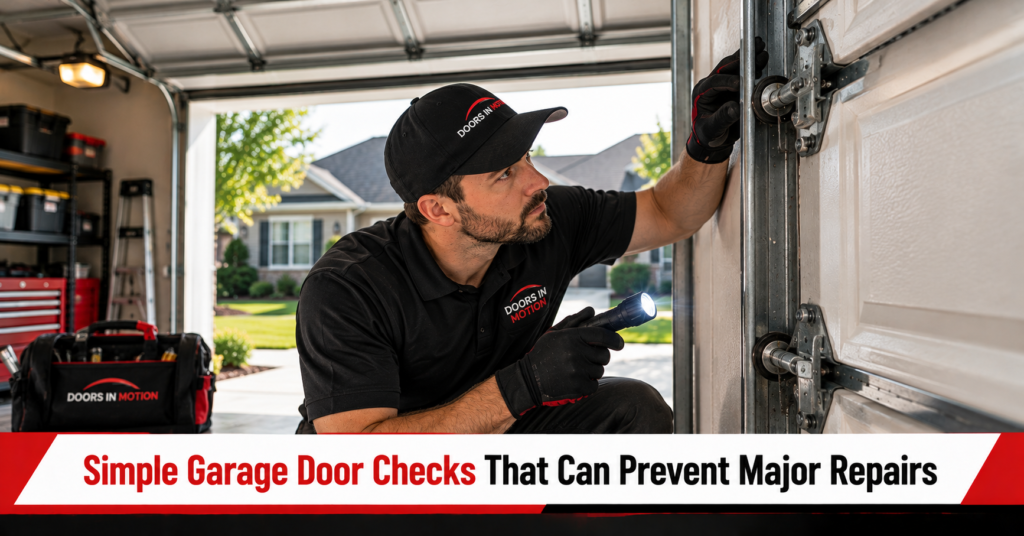
Most garage door breakdowns don’t happen out of nowhere. They build slowly, one worn part at a time, and the warning signs are usually easy to spot if you know where to look. The good news is that a few simple garage door checks, done in just a few minutes, can catch most of these problems before they turn into major repairs.
This guide walks you through the checks that matter most, how often to do them, and when it’s time to bring in a professional. At Doors In Motion Inc, we see the same pattern all the time: the homeowners who take a quick look now and then rarely end up with an emergency.
Why Quick Checks Make Such a Big Difference
A garage door is a system of springs, cables, rollers, tracks, hinges, sensors, and an opener. When one part starts to wear, the others take on extra strain. A dry roller can bend a track. A tired spring can burn out an opener.
Because the door usually keeps working while this happens, the damage goes unnoticed. A short routine check lets you spot changes early, while the fix is still small and simple.
1. The Visual Check
Start by standing inside the garage with the door closed, then look it over from top to bottom. You don’t need tools for this one.
What to look for
- Rust or corrosion on springs, hinges, and brackets
- Thin, wiry strands sticking out of the cables
- Gaps or uneven spacing between rollers and tracks
- Bent or dented tracks
- Cracks or dents in the door panels
- A door that looks slightly crooked when closed
If you spot fraying cables or a bent track, stop using the door and call a professional. Both can fail suddenly.
2. The Sound Check
Your ears are one of the best diagnostic tools you have. Open and close the door once and listen to the whole cycle.
- Grinding or scraping often points to worn rollers or debris in the tracks.
- Squeaking usually means dry hinges or rollers.
- Rattling suggests loose bolts or brackets.
- Popping or banging can signal spring trouble.
- Humming with no movement often means the opener is working but something is blocking the door.
A new sound is useful information. Note when it started, since this helps a technician find the cause faster.
3. The Balance Check
This is one of the most important simple garage door checks, and it tells you a lot about your springs.
- Close the door fully.
- Pull the red emergency release cord to disconnect the opener.
- Lift the door by hand to about halfway.
- Let go carefully.
A balanced door stays in place or moves only slightly. If it drops quickly or shoots upward, the spring tension is off. Don’t try to adjust it yourself. Springs hold dangerous tension, and a spring adjustment service from a trained technician is the safe way to fix it.
4. The Safety Sensor Check
Your auto-reverse sensors sit near the floor on both sides of the door. They stop the door from closing on people, pets, or objects.
To test them, place a small object like a roll of paper towels in the door’s path and close the door. It should stop and reverse right away. Also check that both sensor lights are steady and not blinking.
If the door doesn’t reverse, or the lights flicker, wipe the lenses clean and make sure they face each other. If the problem continues, a quick garage door sensor repair will restore proper, safe operation.
5. The Lubrication Check
Moving parts need lubrication to work smoothly. Dry metal-on-metal contact creates friction and speeds up wear.
Apply a garage door lubricant to the hinges, roller stems, and springs every three to six months. Skip the inside of the tracks, since lubricant there attracts dust and dirt. Avoid WD-40, which isn’t designed for long-term lubrication and can gather grime.
Regular garage door lubrication is one of the easiest ways to keep parts quiet and extend their working life.
6. The Hardware Check
Thousands of open-and-close cycles cause vibration, and vibration loosens bolts. Walk along the door and check the brackets, hinges, and track mounts.
If you find a loose bolt, tighten it gently with the right wrench. Don’t overtighten, since this can strip threads or warp the metal. Never touch the bracket at the bottom corners of the door, since it’s connected to a high-tension cable.
7. The Weatherstripping Check
The rubber seal along the bottom of the door does more than block drafts. It keeps out moisture, pests, and debris.
Look for cracks, brittleness, or sections that have come loose. Close the door and check for daylight along the edges. Damaged weatherstripping lets in moisture, which can cause rust on hardware and warping on wood panels. Replacing a worn seal early is a small job that protects the rest of the door.
8. The Opener Response Check
Pay attention to how your opener behaves. It should respond promptly to the remote and wall button, run smoothly, and stop at the right points.
Watch for:
- A delay between pressing the button and the door moving
- The door stopping partway through
- A louder motor than usual
- The door reversing for no clear reason
These are signs of strain, often caused by a heavy or unbalanced door rather than the opener itself. Catching this early often means a simple garage door opener repair instead of a full replacement.
How Often Should You Do These Checks?
You don’t need to run through everything every week. A simple schedule works well:
- Monthly: Visual check, sound check, and sensor test
- Every three to six months: Lubrication and hardware check
- Twice a year: Balance test and weatherstripping check
- Once a year: A professional garage door inspection
Homeowners in Northbrook and Deerfield, where temperature swings between seasons can stress hardware, often add a quick check right before winter and again in spring.
Common Mistakes Homeowners Make
Ignoring small changes because the door still works. A door can run normally while a spring is nearly worn out.
Relying on lubricant alone. Lubrication helps healthy parts, but it can’t repair a fraying cable or a weak spring.
Attempting spring or cable repairs. These parts are under high tension and need trained handling.
Skipping the sensor test. A failed sensor can go unnoticed until it matters most.
Forcing a stuck door. Pulling, pushing, or pressing the remote repeatedly strains the opener and the rest of the system.
Waiting for a full breakdown. Early attention almost always means a simpler fix.
Expert Advice From Our Technicians
Treat every change as information. A door that was quiet last month and noisy now is telling you something, and it’s usually easiest to fix right then.
Think of the door as one connected system, too. When we find a worn roller, we also check the track, cables, and balance, because one weak part often hides another. Homeowners in Bensenville and Carol Stream who book a yearly visit with Doors In Motion Inc usually find that small issues get handled long before they cause a failure.
When to Stop and Call a Professional
Some findings shouldn’t wait. Stop using the door and arrange emergency garage door repair if you see or hear any of these:
- A loud bang followed by a very heavy door
- Frayed, loose, or snapped cables
- A door off its track or hanging crooked
- A door stuck partly open or closed
- An opener that runs but doesn’t move the door
Continuing to use a damaged door can make the problem worse and put people at risk.
Frequently Asked Questions
What are the most important simple garage door checks?
The visual check, sound check, balance test, and safety sensor test. Together, they reveal most early problems.
How often should I check my garage door?
A quick monthly check is ideal, with lubrication every three to six months and a professional inspection once a year.
Can I do these checks without any tools?
Most of them need no tools at all. Lubrication and tightening hardware only need a lubricant and a basic wrench.
Which garage door parts should I never touch?
Springs, cables, and the bottom corner brackets. They hold high tension and can cause serious injury if handled incorrectly.
Do these checks replace professional service?
No. They help you catch problems early, but a trained technician can spot wear and tension issues that aren’t visible to the untrained eye.
Final Thoughts
A few minutes of attention each month can keep your garage door safe, quiet, and reliable. You don’t need special skills, just a habit of looking, listening, and testing. When something seems off, or when it’s been a while since your last professional visit, Doors In Motion Inc is ready to help you catch it before it becomes a bigger problem.
Contact Us for Garage Door Services and Repairs
At Doors in Motion Inc, we specialize in helping homeowners choose the perfect garage door based on their climate, lifestyle, and aesthetic preferences. Whether you’re in need of garage door repair or installation services, our team is here to guide you.
Call us today at (847) 222-0400 or contact us online for a free consultation.
Explore More Resources
By selecting the right materials and keeping your garage door in top condition with our garage door repair and maintenance services, you’ll enjoy long-lasting protection, improved energy efficiency, and better curb appeal.
Summary
Simple garage door checks include a visual inspection, listening for unusual sounds, testing door balance, checking safety sensors, lubricating moving parts, and tightening loose hardware. Doing these monthly, plus an annual professional inspection, helps homeowners catch wear early and prevent major repairs and sudden breakdowns.