

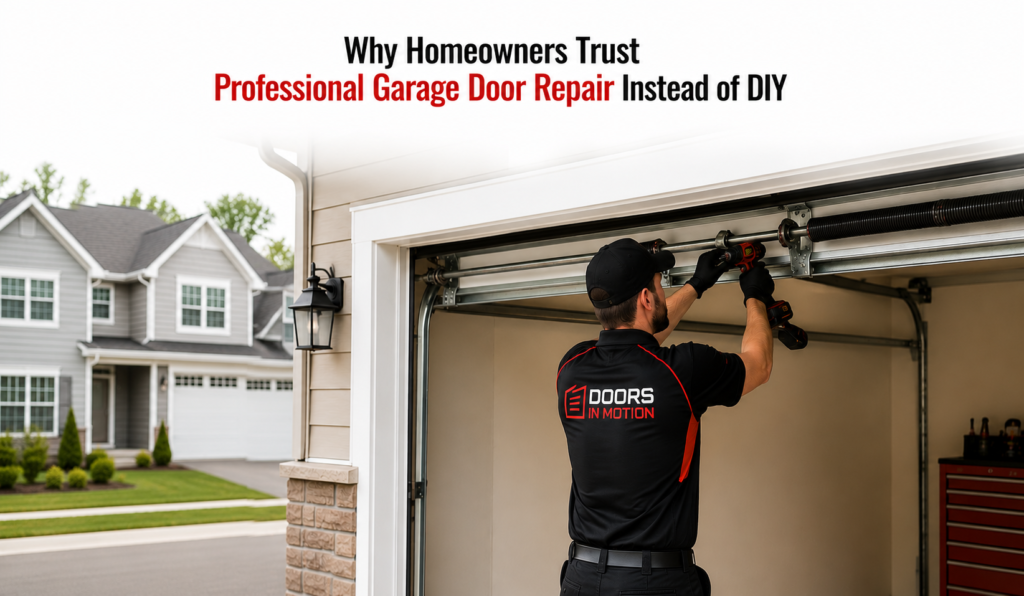
Reviewed by the Doors In Motion Service Team — Licensed & Insured Garage Door Specialists Serving Illinois Since 1969.
It’s easy to see the appeal of fixing a garage door problem yourself. There are videos for nearly everything online, and a squeaky roller or a slow-closing door can feel like a simple weekend fix. But when it comes to professional garage door repair, most homeowners eventually land on the same conclusion: this is one home project worth leaving to someone trained for it.
Here’s why the team at Doors In Motion sees so many homeowners choose professional repair over DIY, and where the line between “safe to try yourself” and “call a technician” actually falls.
The Appeal of DIY Garage Door Repair
It’s understandable why DIY feels tempting. Garage doors look mechanically simple from the outside — a panel, some rollers, a motor. Online tutorials make spring replacement or cable adjustment look straightforward, and tackling it yourself feels like a productive way to spend an afternoon.
The problem is that a garage door’s simplicity is deceiving. What looks like a basic mechanical system is actually a carefully balanced assembly operating under serious tension.
Why Garage Door Repair Is Different From Other DIY Projects
Most home DIY projects — painting, fixing a leaky faucet, assembling furniture — involve manageable risk if something goes wrong. Garage door repair is different because several components are genuinely dangerous when handled incorrectly:
- Torsion and extension springs store enough energy to cause serious injury if released improperly
- Lift cables operate under high tension and can snap back forcefully if mishandled
- The door itself typically weighs well over 100 pounds and moves along a track designed to keep that weight controlled
This combination of weight, tension, and precision is exactly why garage door repair sits in a different risk category than most home projects.
The Real Risks of DIY Garage Door Repair
Spring and Cable Tension
Torsion springs in particular require special winding tools and a clear understanding of how much tension is stored before any adjustment is safe. Attempting this without training is one of the most common causes of serious garage door injuries every year.
Incorrect Diagnosis
A door that seems to have one obvious problem often has a related, less visible issue underneath. Replacing a roller without noticing a bent track, for example, can leave the underlying problem unresolved.
Voided Warranties
Many garage door components, including openers and springs, come with manufacturer warranties that can be voided by improper self-installation or repair, leaving you without coverage if something fails again shortly after.
Improper Balance and Repeat Failures
A garage door that isn’t balanced correctly after a DIY repair puts ongoing strain on the opener and remaining hardware, which often leads to a repeat failure sooner than expected.
What Professional Technicians Bring to the Table
Specialized Tools and Training
Professional technicians use winding bars, tension gauges, and other tools specifically designed for safe spring and cable work — equipment most homeowners don’t have and shouldn’t need to buy for a one-time repair.
Accurate Diagnosis
Because trained technicians see a wide range of garage door issues regularly, they’re able to identify the full scope of a problem, not just the most visible symptom.
Safety Protocols
Professionals follow established procedures for securing a door before working on tensioned components, significantly reducing the risk of injury during the repair itself.
Warranty-Backed Work
Professional repairs typically come with a warranty on both parts and labor, giving you a clear path forward if an issue arises after the repair is complete.
Common Garage Door Repairs Homeowners Attempt (and Why They Often Go Wrong)
- Spring replacement. Without the right winding tools and technique, this is one of the most dangerous DIY attempts homeowners make.
- Cable replacement. Improperly seated cables can slip off the drum, leaving the door unbalanced or unsafe to operate.
- Off-track realignment. Forcing a door back onto a bent or misaligned track can cause further damage to the rollers and track hardware.
- Opener wiring adjustments. Incorrect wiring can interfere with the auto-reverse safety sensors, creating a real safety hazard.
When DIY Is Actually Fine
Not every garage door task requires a professional. As we covered in our post on summer garage door maintenance tips, plenty of routine care is safe and reasonable to handle yourself:
- Lubricating rollers, hinges, and tracks
- Cleaning debris out of the tracks
- Tightening visible, accessible hardware
- Replacing remote or keypad batteries
- Testing the door’s balance (without adjusting springs yourself)
The line is simple: general upkeep is fine to DIY, but anything involving springs, cables, or a door that’s already off-track or malfunctioning belongs to a professional.
Signs You Should Stop and Call a Professional
- A door that opens crooked or lifts unevenly, which we cover in our post on why garage doors open crooked
- A cable that’s frayed, slipped, or already snapped, discussed further in our post on what happens when a garage door cable snaps
- Grinding, binding, or jerky movement during operation
- A door that’s stuck, whether open or closed
How Professional Repair Protects Your Home Long-Term
A correctly balanced, professionally repaired door reduces strain on the opener and hardware, which extends the life of the entire system. It also reduces the chances of a repeat failure shortly after the repair — something that’s more common with DIY attempts that address a symptom rather than the underlying cause.
Local Factors That Make Professional Expertise Even More Valuable
Illinois weather adds another layer of complexity that professional technicians are used to accounting for. As covered in our posts on preparing for freezing temperatures and how humidity affects garage door performance, seasonal extremes accelerate wear on springs, cables, and rollers. Homeowners in Aurora and Elgin often see this play out differently than those in Arlington Heights and Schaumburg, depending on how exposed their garage is to humidity, sun, and winter cold — another reason local, experienced technicians tend to catch issues a generic online tutorial wouldn’t.
Why Homeowners Throughout Illinois Trust Doors In Motion
Doors In Motion has provided garage door service and repair, spring repair, and garage door opener service throughout Illinois for more than 50 years. Our licensed and insured technicians are trained specifically on the safety protocols DIY repair often skips, and every repair is backed by a warranty on parts and labor.
Frequently Asked Questions
Is it ever safe to replace a garage door spring myself?
It’s strongly discouraged. Torsion and extension springs store significant energy, and improper handling is a leading cause of serious garage door injuries.
What garage door tasks are safe to do myself?
Routine maintenance like lubrication, cleaning tracks, tightening visible hardware, and replacing remote batteries are generally safe for homeowners to handle.
Why do DIY garage door repairs often fail again quickly?
DIY repairs frequently address the visible symptom without correcting the underlying imbalance, which puts continued strain on the system and leads to repeat issues.
Can a DIY repair void my garage door warranty?
In many cases, yes. Manufacturer warranties on springs, openers, and other components can be voided by improper self-installation or repair.
How do I know if my garage door issue needs a professional instead of a DIY fix?
If the issue involves springs, cables, a crooked or off-track door, or anything beyond basic cleaning and lubrication, it’s time to call a professional.
Contact Us for Garage Door Services and Repairs
At Doors in Motion Inc, we specialize in helping homeowners choose the perfect garage door based on their climate, lifestyle, and aesthetic preferences. Whether you’re in need of garage door repair or installation services, our team is here to guide you.
Call us today at (847) 222-0400 or contact us online for a free consultation.
Explore More Resources
By selecting the right materials and keeping your garage door in top condition with our garage door repair and maintenance services, you’ll enjoy long-lasting protection, improved energy efficiency, and better curb appeal.
Final Thoughts
DIY has its place with garage doors, but it’s limited to routine upkeep, not repairs involving springs, cables, or a system that’s already malfunctioning. The tension, weight, and precision involved are exactly why so many homeowners ultimately choose professional garage door repair over attempting it themselves.
If you’re facing a repair that goes beyond basic maintenance, Doors In Motion provides trained, warranty-backed service for homeowners throughout the Chicagoland area — the kind of expertise that keeps a simple fix from turning into a bigger problem.
Summary
Homeowners trust professional garage door repair over DIY because springs, cables, and heavy doors involve serious injury risk, require specialized tools, and often hide underlying issues a quick fix won’t catch. Routine tasks like lubrication and cleaning are safe to DIY, but spring, cable, and balance repairs should always go to a trained technician.