

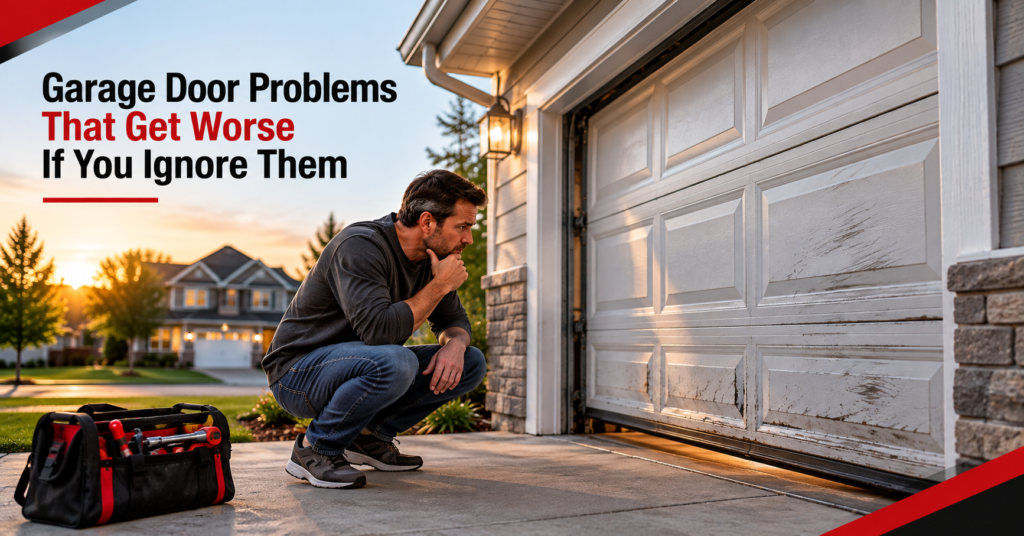
It’s easy to shrug off a squeaky hinge or a door that’s a little slow to respond. The door still opens, so it must be fine, right? Unfortunately, ignoring garage door problems rarely makes them go away. A garage door is a connected system, and one weak part puts extra strain on everything around it.
This guide covers the most common issues that grow worse over time, the warning signs to watch for, and when it’s time to call a professional. At Doors In Motion Inc, we see the same pattern every week: a small problem that was easy to fix early turns into a major repair because it was left alone.
Why Small Garage Door Problems Don’t Stay Small
Springs, cables, rollers, tracks, hinges, sensors, and the opener all share the work of moving a heavy door. When one component starts to fail, the others pick up the slack. They wear faster, and the original problem spreads.
That’s why a door that “mostly works” can fail suddenly. The warning signs were there, but the system kept compensating until it couldn’t anymore.
1. Worn or Weakening Springs
Springs lose tension with every cycle. At first, the door just feels a bit heavier, and the opener works a little harder. Eventually, the spring snaps, and the door won’t lift at all.
An opener forced to haul a door with weak springs wears out much sooner than it should. Catching the problem early means a simple garage door spring repair instead of a damaged opener on top of a broken spring. Springs are under serious tension, so this is never a DIY job.
2. Frayed Cables
Garage door cables fray one strand at a time. You might spot a few thin wires poking out near the bottom bracket, or notice the door hanging slightly crooked.
If the cable keeps fraying, it will snap. A snapped cable can send the door out of alignment, bend the tracks, or drop one side of the door suddenly. A timely garage door cable replacement prevents all of that.
3. Worn Rollers and Dry Hinges
Squeaking, grinding, and jerky movement usually point to worn rollers or dry hinges. Many homeowners tune out these sounds because the door keeps working.
Over time, worn rollers drag against the tracks, bend them, and add strain to the opener. Cracked hinges can also let door panels flex and separate. Replacing a worn roller early is a small job. Ignoring it can turn it into a track problem.
4. Misaligned Tracks
Tracks can drift out of alignment after a minor bump or years of vibration. You may see uneven gaps between the rollers and the track, or a door that wobbles as it travels.
A misaligned track makes the door rub, jam, and eventually jump off its path. Once a door comes off track, it’s unsafe to operate, and the fix becomes more involved. Early adjustment keeps it simple, and off-track garage door repair is far more demanding than a quick realignment.
5. Misaligned or Faulty Sensors
Safety sensors near the floor tell the door to stop and reverse when something is in its way. A small bump can knock them out of line. A door that sometimes refuses to close or reverses for no reason is trying to tell you something.
Some homeowners get used to holding the wall button down as a workaround. That bypasses an important safety feature and wears out the opener. A quick garage door sensor repair restores normal, safe operation.
6. Opener Strain
Openers rarely die without warning. They slow down, hum louder, stop partway, or respond late to the remote. These are signs the motor is working harder than it should, often because of a heavy door or worn parts elsewhere.
If you keep running the opener in that condition, the gears and motor wear out faster. Timely garage door opener repair can address the real cause before the whole unit gives out.
7. Damaged Weatherstripping and Panels
Cracked seals and dented panels may look like cosmetic issues, but they let in moisture, pests, and cold air. Moisture leads to rust on hardware and warping on wood panels.
A small dent can also weaken a panel’s strength, and the panel may flex or crack with continued use. Fixing it early protects the rest of the door.
Common Mistakes Homeowners Make
- Waiting for a total failure. Most breakdowns have clear warning signs well beforehand.
- Relying on lubricant alone. Lubrication helps healthy parts, but it can’t fix a fraying cable or a weak spring.
- Forcing a stuck door. Pulling or repeatedly pressing the remote strains the opener and the rest of the system.
- Attempting spring or cable repairs personally. These parts hold dangerous tension and need trained handling.
- Skipping the safety sensor test. A sensor that fails silently is a real risk for kids and pets.
Practical Tips to Stop Problems Before They Grow
- Check the springs, cables, rollers, and tracks visually once a month.
- Listen for new sounds, and note when they started.
- Lubricate hinges and rollers every few months.
- Test the balance by disconnecting the opener and lifting the door halfway.
- Test the auto-reverse feature with a small object in the door’s path.
- Schedule a professional garage door inspection once a year.
Expert Advice From Our Technicians
Treat every change as useful information. A new noise, a slower response, or a door that looks slightly uneven is usually the earliest clue about what’s wearing out.
Think of the door as a single system, too. Replacing one worn part while leaving the rest unchecked is a common reason problems come back. A full check of springs, cables, rollers, tracks, and the opener together gives a much more lasting result.
Homeowners in Bartlett and Wheeling who call at the first sign of change usually end up with a quick, simple fix. Those in Skokie and Roselle who book yearly routine maintenance service tend to avoid surprises altogether.
When to Stop Using the Door and Call Right Away
Some signs mean the door should not be used until it’s checked:
- A loud bang followed by a very heavy door
- Visibly frayed or snapped cables
- A door hanging crooked or off one track
- A door stuck partway open or closed
- An opener that runs, but the door doesn’t move
In these cases, arrange emergency garage door repair. Continuing to operate a damaged door puts people at risk and makes the problem bigger.
Frequently Asked Questions
Do garage door problems really get worse on their own?
Yes. Worn parts keep wearing, and they push extra load onto nearby components, so small issues tend to spread.
What’s the most dangerous problem to ignore?
Broken or weakened springs and frayed cables. Both hold high tension and can fail suddenly.
Is it safe to use a garage door that makes strange noises?
It’s best not to keep using it. Unusual sounds point to a specific issue that can worsen with every cycle.
How often should I have my garage door inspected?
Once a year is standard. Doors used many times daily may benefit from a check every six months.
Can I fix these problems myself?
Simple tasks like lubrication and tightening loose bolts are fine. Springs, cables, and track issues should always be handled by trained technicians.
Contact Us for Garage Door Services and Repairs
At Doors in Motion Inc, we specialize in helping homeowners choose the perfect garage door based on their climate, lifestyle, and aesthetic preferences. Whether you’re in need of garage door repair or installation services, our team is here to guide you.
Call us today at (847) 222-0400 or contact us online for a free consultation.
Explore More Resources
By selecting the right materials and keeping your garage door in top condition with our garage door repair and maintenance services, you’ll enjoy long-lasting protection, improved energy efficiency, and better curb appeal.
Final Thoughts
Garage door problems almost never fix themselves. They build quietly, spread to other parts, and then show up all at once as a breakdown. Paying attention to early signs and acting on them keeps your door safe, smooth, and dependable. If something about your door seems off, Doors In Motion Inc is ready to find the cause and fix it before it grows.
Summary
Ignoring garage door problems lets small issues like worn rollers, fraying cables, fatigued springs, and misaligned sensors grow into serious failures. Each damaged part strains the others, raising safety risks and leading to larger repairs. Addressing warning signs early and scheduling an annual professional inspection keeps the door safe and reliable.