

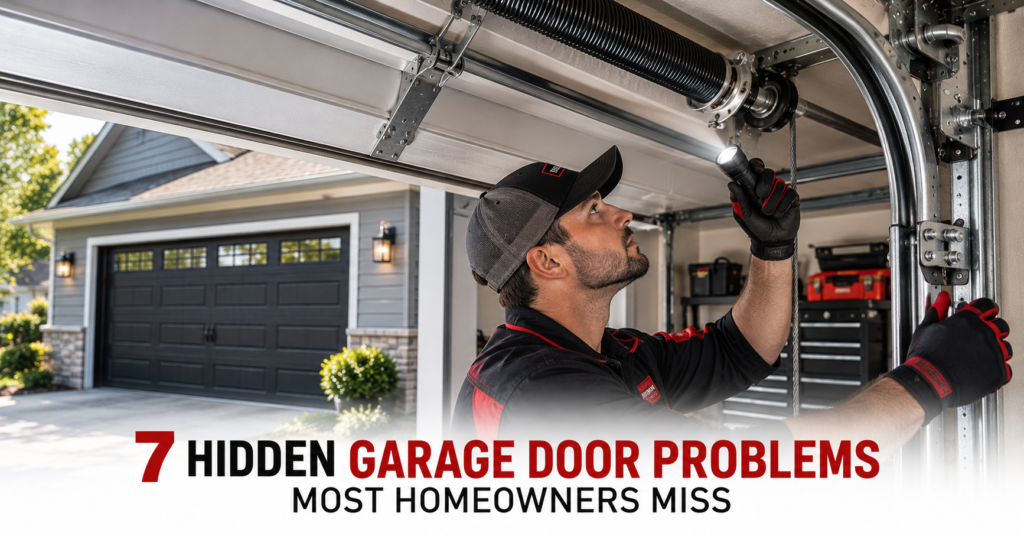
Most garage door problems don’t show up overnight. They creep in slowly — a slight delay when the door opens, a faint grinding sound, a corner that looks just a little off. Because the door still “works,” most homeowners never think twice. But these small, easy-to-miss signs are often early warnings of much bigger issues waiting to happen.
This guide walks through the hidden garage door problems that homeowners commonly overlook, why they matter, and what to do about them before they turn into costly, inconvenient repairs. At Doors In Motion, we inspect garage doors every day, and the same overlooked issues show up again and again — often in homes where the owner had no idea anything was wrong.
Why Garage Door Problems Go Unnoticed
Garage doors are built to operate quietly and reliably for years, which is exactly why small issues get missed. Homeowners interact with the door dozens of times a week without really watching it closely. As long as it opens and closes, most people assume everything is fine.
But a garage door is a mechanical system with more than a dozen moving parts working under constant tension. When one component starts to wear, it rarely announces itself with a dramatic failure. Instead, it shows up as a subtle change that’s easy to explain away — “it’s just a little louder” or “it’s probably the cold weather.”
That’s exactly the kind of thinking that lets small problems grow into expensive ones.
1. Worn Rollers That Aren’t Squeaking Yet
Rollers guide your door along the tracks, and they wear down gradually over time. Homeowners often wait for squeaking before they suspect a problem, but rollers can be cracked, chipped, or flattened on one side long before they make any noise.
What to watch for: Jerky movement, slight wobbling as the door travels, or uneven gaps along the track.
Why it matters: Worn rollers put extra strain on the tracks and opener, which can lead to a roller replacement service becoming a full track repair if ignored too long.
2. Micro-Fraying in the Cables
Garage door cables carry enormous tension, working alongside the springs to lift and lower the door safely. A cable doesn’t need to snap to be dangerous — it can be fraying in individual strands for months before it fails.
What to watch for: Thin, wiry strands sticking out from the main cable, or slight unevenness in how the door hangs when closed.
Why it matters: A frayed cable is one of the most common causes of sudden garage door failure, and it’s rarely something homeowners catch on their own. This is exactly why a cable inspection should be part of any professional visit.
3. Spring Fatigue You Can’t See
Garage door springs lose tension gradually through normal use, long before they show visible rust or wear. A door that used to feel light and balanced may start requiring more effort from the opener, even though nothing looks obviously wrong.
What to watch for: The opener straining more than usual, or the door feeling heavier if operated manually.
Why it matters: Fatigued springs are a leading cause of unexpected breakdowns. Since spring tension is dangerous to test or adjust without training, this is one area where a spring adjustment service from a professional is essential, not optional.
4. Misaligned Sensors That Still “Work”
Auto-reverse safety sensors near the bottom of the tracks are easy to bump out of alignment without realizing it — a stored bike, a moved storage bin, even a slight nudge while parking.
What to watch for: A blinking light on one sensor, or the door reversing unexpectedly on some closes but not others.
Why it matters: Slightly misaligned sensors can still function most of the time, which makes the problem easy to dismiss. But when they fail to detect an obstruction, it becomes a genuine safety risk, especially in homes with kids or pets.
5. Track Gaps That Widen Slowly
Garage door tracks can shift out of alignment gradually, especially after years of daily use or minor impacts. Because the change happens slowly, the door often still opens and closes normally, masking the problem.
What to watch for: Uneven spacing between the rollers and the track, or the door leaning slightly to one side.
Why it matters: A misaligned track puts uneven pressure on rollers, cables, and the opener. Left alone, it often leads to the door jumping the track entirely.
6. Weatherstripping Damage That Lets in More Than Cold Air
The rubber seal along the bottom and sides of your garage door does more than block drafts. It keeps out moisture, pests, and debris. Cracked or brittle weatherstripping is easy to overlook since it’s low to the ground and rarely inspected closely.
What to watch for: Visible cracking, gaps where light shines through, or a noticeably drafty garage.
Why it matters: Moisture intrusion can lead to rust on hardware and warping on wood-panel doors, both of which shorten the door’s lifespan.
7. Opener Motor Strain Before a Full Breakdown
Garage door openers often show signs of strain well before they stop working entirely. A motor working harder than it should is one of the most commonly missed hidden garage door problems, because the door still opens — just not the way it used to.
What to watch for: Slower operation, a change in motor sound, or the opener stopping partway through a cycle.
Why it matters: Continued strain shortens the opener’s lifespan significantly. Scheduling routine maintenance service at the first sign of slowdown often prevents a full opener replacement.
Common Mistakes That Let These Problems Go Undetected
- Only paying attention when the door makes noise
- Assuming slow operation is just “normal aging”
- Never testing the auto-reverse safety feature
- Skipping annual professional inspections
- Lubricating parts without checking for underlying wear first
Expert Advice: What a Trained Eye Catches That You Might Not
Professional technicians aren’t just looking for obvious damage. They check tension consistency across both springs, look for wear patterns hidden under hardware, and test the door’s balance point precisely — details that are difficult to evaluate without training and the right tools.
If it’s been more than a year since your last inspection, especially for homeowners in Elgin, Schaumburg, Hoffman Estates, or Palatine, where seasonal temperature swings add extra strain on hardware, it’s worth scheduling a checkup even if nothing seems obviously wrong.
When Hidden Problems Become Real Emergencies
Ignoring these small signs doesn’t just risk inconvenience. It can lead to:
- A door becoming stuck fully open or fully closed
- Sudden cable or spring failure
- Increased risk of injury during manual operation
- Costly emergency repairs instead of routine fixes
Frequently Asked Questions
How can I tell if my garage door has a hidden problem?
Watch for subtle changes — slower movement, slight noise changes, uneven gaps, or the opener working harder than usual. These are early indicators, not just cosmetic quirks.
Do I need a professional inspection if my door still works fine?
Yes. Many of the issues above don’t affect basic operation until they’ve progressed significantly. Annual inspections catch problems while they’re still minor.
Can I fix worn rollers or frayed cables myself?
Roller replacement can sometimes be handled by confident DIYers, but cable and spring issues involve high tension and should always be left to trained technicians.
How often should garage door sensors be checked?
At least twice a year, or anytime you notice the door behaving inconsistently when closing.
What’s the most commonly missed garage door problem?
Spring fatigue tends to be the most overlooked, since it develops gradually and isn’t visible without a proper inspection.
Contact Us for Garage Door Services and Repairs
At Doors in Motion Inc, we specialize in helping homeowners choose the perfect garage door based on their climate, lifestyle, and aesthetic preferences. Whether you’re in need of garage door repair or installation services, our team is here to guide you.
Call us today at (847) 222-0400 or contact us online for a free consultation.
Explore More Resources
By selecting the right materials and keeping your garage door in top condition with our garage door repair and maintenance services, you’ll enjoy long-lasting protection, improved energy efficiency, and better curb appeal.
Final Thoughts
Garage doors rarely fail without warning — the warning signs are just easy to miss. Paying attention to small changes in sound, speed, and balance can help you catch problems while they’re still simple to fix. If something feels even slightly different than it used to, it’s worth a closer look. The team at Doors In Motion is always ready to help homeowners spot and solve these hidden issues before they turn into bigger ones.
Summary
Hidden garage door problems like worn rollers, frayed cables, spring fatigue, and sensor misalignment often go unnoticed because the door still appears to work. Watching for subtle changes in sound, speed, and balance, plus scheduling annual professional inspections, helps homeowners catch issues early and avoid costly emergency repairs.