

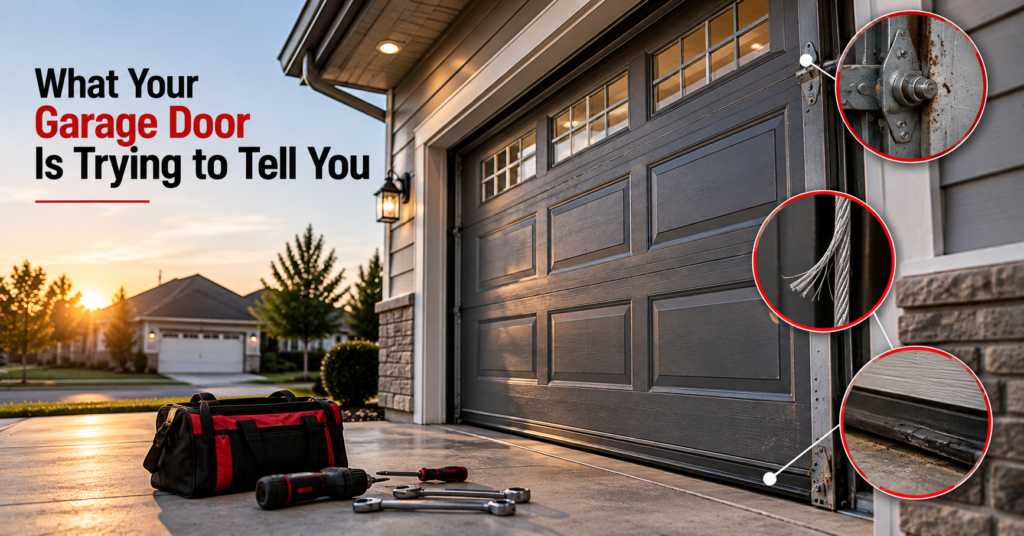
Your garage door can’t talk, but it’s constantly communicating. Every squeak, pause, and shudder is information — a signal about what’s happening inside the mechanism you rarely stop to think about. Most homeowners just don’t speak the language yet.
This guide translates the most common garage door warning signs into plain English: what each one actually means, why it happens, and what to do about it. At Doors In Motion Inc, we hear the same stories again and again — “it’s been making that noise for a while” — and almost every time, the door had been trying to say something long before it finally stopped working.
Why Your Garage Door “Talks” Before It Breaks
A garage door is a mechanical system made up of springs, cables, rollers, tracks, hinges, and an opener, all working together under constant tension. When one part starts to wear, it doesn’t fail instantly. It changes gradually, and those changes show up as sound, movement, speed, or resistance.
Learning to notice these signals is one of the simplest ways to avoid a sudden breakdown. The door is already telling you what it needs. The trick is knowing how to listen.
Decoding the Sounds Your Garage Door Makes
A Loud Bang
This almost always means a spring has broken. It’s one of the most startling sounds a garage door makes, and it usually leaves the door too heavy for the opener to lift. This calls for immediate garage door spring repair, not a DIY fix.
Grinding or Scraping
This typically points to a roller problem, whether it’s dirt buildup, a flat spot, or a roller that’s cracked and no longer rolling smoothly. Left alone, it accelerates wear on the tracks.
A High-Pitched Squeak
Usually the simplest fix on this list. Dry hinges or rollers need lubrication. If the squeak returns quickly after lubricating, it may point to a part that’s worn enough to need replacement.
Rattling or Clanking
Loose hardware is the most common cause. Bolts, brackets, and hinges can work themselves loose over thousands of open-and-close cycles. A quick tightening often solves it, but persistent rattling is worth a closer look.
A Humming Sound With No Movement
This usually means the opener’s motor is running, but something is preventing the door from physically moving. It could be a jammed track, a broken spring, or an obstruction. Don’t keep pressing the remote — this can strain or damage the motor.
Decoding How Your Garage Door Moves
Jerky or Uneven Movement
This often signals a track misalignment or roller wear. The door is still functioning, but unevenly, which puts extra stress on the cables and opener.
The Door Feels Heavier Than Usual
A heavier feel almost always points to spring fatigue. Springs lose tension gradually, and a noticeably heavier door is an early sign worth addressing through a spring adjustment service.
One Side Lower Than the Other
A door that closes unevenly or looks crooked when closed suggests a cable issue, a track problem, or uneven spring tension. This is a visible sign that shouldn’t be ignored, since it often indicates a cable close to failing.
Slower Response Time
If there’s a noticeable delay between pressing the remote and the door responding, the opener may be straining, or the door’s balance may be off, making the opener work harder than it should.
Decoding Your Garage Door’s Behavior
It Reverses Unexpectedly
This usually points to a safety sensor issue. The sensors near the floor are sensitive to misalignment, dirt, or even direct sunlight interfering with the signal.
It Stops Partway Through a Cycle
This can indicate the opener’s force settings are off, a track obstruction, or a mechanical issue preventing smooth movement. It shouldn’t be ignored, since it may mean the door is struggling against resistance it can’t overcome.
It Opens Fine but Closes Slowly (or Vice Versa)
Uneven speed between opening and closing often points to spring tension that’s no longer balanced correctly, putting more strain on one side of the system than the other.
Practical Tips for “Listening” to Your Garage Door
- Operate the door slowly in your mind — notice the full cycle, not just the start
- Compare how it sounds and moves to a few months ago
- Keep a mental or written note of any new sound, even if minor
- Test the auto-reverse safety feature every few months
- Don’t dismiss small changes just because the door still “works”
Common Mistakes Homeowners Make When Their Door “Speaks Up”
Ignoring small noises because the door still opens. Minor sounds are often the earliest and easiest signals to act on.
Assuming all noise is normal aging. Most sounds point to something specific and fixable, not just general wear.
Trying to fix spring or cable issues personally. These components are under serious tension and require trained handling.
Waiting for a complete stop before calling for help. Acting on early signals usually means a simpler, less disruptive fix.
Only lubricating without checking for deeper wear. Lubrication helps, but it won’t solve an issue caused by a worn or damaged part.
Expert Advice: How Professionals “Translate” These Signals
Experienced technicians don’t just fix the obvious problem; they listen for what caused it. A squeak that keeps returning after lubrication, for example, usually means a part needs replacing, not just oiling. A door that closes unevenly gets checked for both cable tension and track alignment, since the same symptom can have different root causes.
This kind of diagnostic approach is why a professional garage door inspection is so valuable. It’s not just about fixing what’s obviously wrong. It’s about interpreting the smaller signals correctly the first time.
For homeowners in Schaumburg and Elgin, where seasonal temperature shifts can introduce new sounds and behaviors each year, an annual checkup helps keep translation simple instead of guesswork.
When Your Garage Door’s Signals Mean Stop and Call for Help
Some signals call for immediate action rather than monitoring:
- A loud bang followed by the door becoming very heavy
- Visible fraying on any cable
- The door hanging crooked or off one track
- Sparks, burning smells, or unusual electrical sounds from the opener
- The door falling or dropping suddenly during operation
In these cases, avoid operating the door and contact a professional for emergency garage door repair.
Frequently Asked Questions
Why is my garage door suddenly making noise it never made before?
New noises usually point to a specific change, such as a dry hinge, worn roller, or loosening hardware, rather than random aging.
Is it normal for a garage door to sound different over time?
Some change is expected with regular use, but sudden or significant changes in sound are worth investigating rather than ignoring.
Can I diagnose these signals myself?
Basic signals like squeaking from dry hinges are easy to identify. More complex signs, like uneven movement or heaviness, are best evaluated by a trained technician.
What’s the most serious sound a garage door can make?
A loud bang is the most serious, as it usually indicates a broken spring, which affects the door’s ability to move safely.
How quickly should I respond to a new warning sign?
Sooner is always better. Early attention typically means a simpler fix, while delays can let a minor issue develop into a bigger repair.
Contact Us for Garage Door Services and Repairs
At Doors in Motion Inc, we specialize in helping homeowners choose the perfect garage door based on their climate, lifestyle, and aesthetic preferences. Whether you’re in need of garage door repair or installation services, our team is here to guide you.
Call us today at (847) 222-0400 or contact us online for a free consultation.
Explore More Resources
By selecting the right materials and keeping your garage door in top condition with our garage door repair and maintenance services, you’ll enjoy long-lasting protection, improved energy efficiency, and better curb appeal.
Final Thoughts
Your garage door is always giving you feedback; you just have to know how to read it. Sounds, movement, and timing all carry information about what’s happening inside the mechanism. Paying attention to these signals and acting on them early is one of the simplest ways to avoid an unexpected breakdown. If your door is trying to tell you something and you’re not sure what, Doors In Motion Inc can help translate the signs and get things running smoothly again.
Summary
A garage door communicates problems through sound, speed, and movement; warning signs like grinding, heaviness, uneven closing, or sudden reversal often signal specific mechanical issues. Recognizing these signals early and scheduling a professional inspection helps homeowners catch problems before they turn into costly breakdowns.