

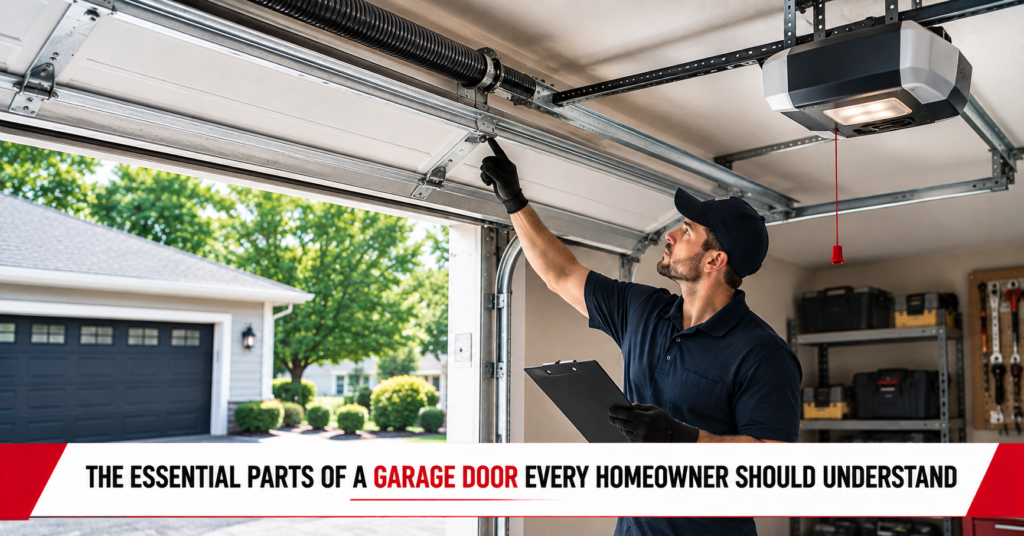
Reviewed by the Doors In Motion Inc Service Team — Licensed & Insured Garage Door Specialists Serving Illinois Since 1969.
Most homeowners can describe a garage door problem without knowing the actual name of the part involved, which makes it harder to understand what a technician is telling you or what a repair actually involves. Learning the essential garage door parts doesn’t require any technical background — just a clear picture of what each piece does and how they work together.
Here’s the plain-language breakdown from the team at Doors In Motion Inc, organized by what each group of parts is actually responsible for.
Why Knowing These Parts Matters
Understanding basic garage door terminology helps you describe a problem more accurately, follow a technician’s explanation with confidence, and recognize which of our other guides applies to whatever you’re dealing with. It’s the foundation that makes every other garage door topic easier to follow.
The Structural Components
Panels and Frame
The panels are the door sections you see every day, connected together and mounted within a frame fixed to your garage opening.
Tracks
Metal tracks run vertically and then curve horizontally along the ceiling, guiding the door’s path as it opens and closes.
Rollers and Hinges
Rollers sit inside the tracks and allow the door to glide smoothly, while hinges connect the panel sections together and allow the door to bend as it curves along the track.
Brackets and Fasteners
Brackets hold the tracks in place along the wall and ceiling, secured by bolts and fasteners that keep the entire structure stable during operation.
The Lifting System
Springs (Torsion vs. Extension)
Springs supply the force that lifts the door’s weight. Torsion springs are mounted horizontally above the door and twist to create lifting force, while extension springs run along the horizontal tracks and stretch to do the same job.
Lift Cables
Cables connect the bottom corners of the door to the spring system, transferring the springs’ lifting force to the door itself.
Drums and Pulleys
Drums are the spools that cables wind around as the door moves, working alongside the springs to control how much cable is released or retracted during each cycle.
The Opener System
Motor and Trolley
The motor drives a trolley along a rail, and the trolley connects to an arm attached to the top of the door, pulling or pushing it through each cycle.
Rail and Drive Mechanism
Depending on the opener type, the trolley may be driven by a chain, belt, or screw mechanism running the length of the rail.
Manual Release Cord
This cord disconnects the trolley from the opener, allowing the door to be operated by hand during a power outage or opener malfunction.
The Safety and Security Features
We cover these in full detail in our post on garage door safety features every homeowner should understand, but the essentials include the photo-eye sensors near the base of the tracks, which detect obstructions, and the auto-reverse mechanism, which stops and reverses the door if it meets resistance while closing.
Weatherproofing Components
Weatherstripping
Rubber seals along the bottom, sides, and top of the door block out moisture, drafts, and debris.
Thresholds and Seals
Some installations include an additional threshold seal at the floor level for extra protection against water intrusion.
How These Parts Work Together
Each of these systems depends on the others. The springs and cables provide the lifting force, the opener supplies controlled movement, the tracks and rollers guide the door’s path, and the safety features monitor the whole process for anything unexpected. When one part wears down or falls out of balance, it typically shows up as strain somewhere else in the system, which is why understanding the full picture makes troubleshooting so much easier.
Why Understanding These Parts Helps You Communicate With a Technician
Being able to say “the cable slipped off the drum” instead of “something came loose near the spring thing” helps a technician understand your situation faster, and it also helps you follow along with the explanation and recommended repair.
How This Glossary Connects to Common Garage Door Issues
Now that you know the basic parts, several of our other guides will make a lot more sense. Our post on what happens when a garage door cable snaps covers the lifting system in more depth, our post on why garage doors open crooked often traces back to the springs and cables covered here, and our post on common garage door opener problems and their causes explains issues with the motor and trolley system in detail. Our post on what happens when garage door hardware starts wearing out focuses specifically on the rollers, hinges, and tracks described above.
A Few Local Notes on Parts and Climate
Certain parts are more exposed to Illinois weather than others. Weatherstripping and springs tend to show weather-related wear first, a topic we cover in our posts on preparing for freezing temperatures and how rain and humidity affect garage door performance. Homeowners in Schaumburg and Aurora often notice weatherstripping wear from humidity first, while those in Naperville and Arlington Heights may see spring-related cold stress show up earlier in winter.
When to Call Doors In Motion
Whether you’re trying to describe an issue or just want to better understand your garage door system, Doors In Motion Inc is happy to walk homeowners throughout Illinois through what’s going on. We provide garage door service and repair, spring repair, and garage door opener service for every part of the system covered here.
Frequently Asked Questions
What’s the difference between torsion and extension springs?
Torsion springs mount horizontally above the door and twist to create lifting force, while extension springs run along the horizontal tracks and stretch to provide the same function.
What does the drum do on a garage door?
The drum is the spool that the lift cable winds around, working with the springs to control how the cable releases and retracts as the door moves.
Why do I need to know these parts if I’m not doing the repair myself?
Understanding basic terminology helps you describe issues more accurately and follow a technician’s explanation, making the whole repair process smoother.
What part usually fails first on an older garage door?
Weatherstripping and springs tend to show wear earliest, since they’re either directly exposed to weather or under constant mechanical tension.
Is the opener considered part of the garage door itself?
The opener is a separate system that operates the door, but it works closely with the door’s springs, cables, and tracks, which is why issues in one system often affect the other.
Contact Us for Garage Door Services and Repairs
At Doors in Motion Inc, we specialize in helping homeowners choose the perfect garage door based on their climate, lifestyle, and aesthetic preferences. Whether you’re in need of garage door repair or installation services, our team is here to guide you.
Call us today at (847) 222-0400 or contact us online for a free consultation.
Explore More Resources
By selecting the right materials and keeping your garage door in top condition with our garage door repair and maintenance services, you’ll enjoy long-lasting protection, improved energy efficiency, and better curb appeal.
Final Thoughts
Understanding the essential parts of your garage door — the structural components, the lifting system, the opener, and the safety features — makes every other aspect of ownership easier, from spotting early warning signs to following a technician’s explanation with confidence.
If you have questions about any part of your garage door system, Doors In Motion Inc is available to help homeowners throughout the Chicagoland area make sense of it.
Summary
The essential parts of a garage door include the panels and tracks, the springs and cables that provide lifting force, the opener’s motor and trolley, safety sensors, and weatherstripping seals. Understanding how these parts work together makes it easier to recognize problems and communicate clearly with a repair technician.