

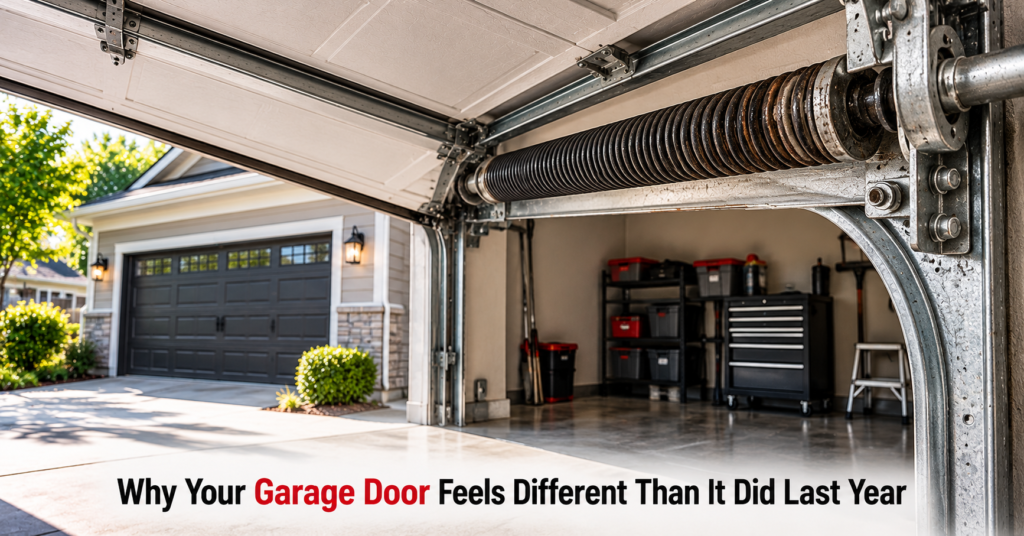
You open the garage door the same way you always have, but something feels off. Maybe it’s a little slower. Maybe it groans instead of gliding. Maybe the remote takes an extra second to respond. Nothing is broken, exactly — it just doesn’t feel like it used to.
That feeling isn’t in your head. Garage doors change gradually over a year of daily use, temperature swings, and normal wear. This guide breaks down why your garage door feels different than it did twelve months ago, what’s actually happening mechanically, and what you can do about it before a subtle change turns into a real problem. At Doors In Motion, this is one of the most common concerns homeowners bring to us — and almost always, there’s a clear, fixable reason behind it.
Your Garage Door Is a Mechanical System, Not a Fixed Object
It’s easy to think of a garage door as a solid, unchanging structure. In reality, it’s a system of springs, cables, rollers, and hinges working together under constant tension, opening and closing potentially thousands of times a year.
Every one of those cycles causes a tiny amount of wear. On their own, these changes are too small to notice day to day. But stacked up over a full year, they add up to a door that feels noticeably different, even if nothing has technically “broken.”
Common Reasons Your Garage Door Feels Different
1. Spring Tension Has Gradually Decreased
Springs lose a small amount of tension with every cycle. After a year of regular use, that loss becomes noticeable. The door may feel heavier when moved manually, or the opener may seem to strain more than it used to.
This is one of the most common — and most misunderstood — reasons a door “feels off.” A spring adjustment service can restore proper balance, but spring tension should never be adjusted without professional training, since the tension involved can cause serious injury.
2. Rollers Have Worn Down
Rollers move constantly, and after a year, even quality rollers show wear. Worn rollers create small amounts of friction and vibration that weren’t there before, which often shows up as slightly jerky movement or a subtle rattling sound.
3. Lubrication Has Broken Down
Lubricant applied a year ago has likely dried out, collected dust, or worn away entirely from moving parts like hinges and rollers. This alone can make a door sound and feel noticeably different, since dry metal-on-metal contact creates friction that wasn’t there when everything was freshly lubricated.
4. Weather Has Taken a Toll
Illinois homeowners deal with real seasonal extremes, and garage doors absorb that stress all year long. Metal contracts in the cold and expands in the heat, hinges tighten or loosen slightly with temperature changes, and weatherstripping can crack or shrink over time.
Homeowners in Wheaton and Bolingbrook, where temperature swings between seasons are especially sharp, often notice this effect more than most — a door that moved smoothly in July can feel stiffer by January.
5. The Opener’s Motor Has Aged
Garage door openers don’t fail suddenly in most cases. Motors gradually lose efficiency, especially after a year of consistent use. This often shows up as slightly slower operation, a change in motor sound, or the door taking a moment longer to respond to the remote.
6. Cables Have Stretched Slightly
Cables can stretch a small amount over time under continuous tension. This subtle change can throw off the door’s balance just enough to feel noticeable, even though nothing appears visibly wrong.
7. Hardware Has Loosened
Vibration from a year of regular operation can gradually loosen bolts, brackets, and hinges. Individually, these are minor. Together, they can make the whole door feel less solid and more prone to rattling.
Practical Tips to Restore Your Garage Door’s Original Feel
- Apply fresh lubricant to hinges, rollers, and springs every few months
- Tighten visible bolts and brackets carefully, without over-tightening
- Test the door’s balance by disconnecting the opener and lifting manually
- Replace worn weatherstripping to reduce weather-related stiffness
- Schedule a professional garage door inspection if the “off” feeling persists after basic upkeep
Common Mistakes Homeowners Make When Their Door Feels Different
Assuming it’s just “getting old.” Age plays a role, but most of these issues are fixable, not signs the door needs full replacement.
Ignoring the change because it still works. A door that “still works” can still be developing a serious underlying issue.
Over-lubricating instead of inspecting. Adding more lubricant without checking for worn parts often masks a problem instead of solving it.
Trying to adjust spring tension personally. This is one of the most dangerous DIY mistakes homeowners make with garage doors.
Waiting for a complete breakdown before calling for help. Early attention is almost always simpler and less disruptive than emergency repairs.
Expert Advice: What Usually Explains the “Different” Feeling
In our experience, roughly two-thirds of “it just feels different” calls trace back to a combination of spring fatigue and worn rollers rather than one dramatic issue. That’s actually good news: these are predictable, well-understood problems with straightforward fixes when caught early.
A routine maintenance service once a year is often enough to catch these gradual changes before they become noticeable enough to worry about. For homeowners in Des Plaines and Glenview, where garages see heavy daily use, a check every six months may be worth considering.
When a “Different Feeling” Signals a Bigger Problem
Most of the time, this is a normal part of a garage door’s lifecycle. But pay closer attention if you notice:
- The door suddenly feels much heavier overnight
- Grinding or scraping sounds that weren’t there before
- The door stopping partway through opening or closing
- Visible sagging on one side
These signs suggest something more urgent than gradual wear and are worth addressing quickly.
Frequently Asked Questions
Is it normal for a garage door to feel different after a year?
Yes. Regular use, weather exposure, and gradual component wear are normal and expected over that timeframe.
Does a “different feeling” always mean something is broken?
Not necessarily. It’s often early wear that hasn’t caused a functional failure yet, which is actually the best time to address it.
Can lubrication alone fix the issue?
Sometimes, especially if dried-out lubricant is the main cause. But if the feeling persists after lubrication, an inspection is worth scheduling.
How often should garage door components be checked?
Once a year is standard for most homes, though heavier daily use may call for more frequent checks.
Should I be concerned if only the opener feels slower?
A slower opener alone isn’t usually an emergency, but it’s worth monitoring and mentioning during your next inspection.
Contact Us for Garage Door Services and Repairs
At Doors in Motion Inc, we specialize in helping homeowners choose the perfect garage door based on their climate, lifestyle, and aesthetic preferences. Whether you’re in need of garage door repair or installation services, our team is here to guide you.
Call us today at (847) 222-0400 or contact us online for a free consultation.
Explore More Resources
By selecting the right materials and keeping your garage door in top condition with our garage door repair and maintenance services, you’ll enjoy long-lasting protection, improved energy efficiency, and better curb appeal.
Final Thoughts
A garage door that feels different than it did last year isn’t unusual — it’s a normal sign of a mechanical system doing its job through months of daily use and seasonal stress. The key is paying attention early, rather than waiting for the feeling to turn into an actual failure. If something about your door doesn’t feel quite right, Doors In Motion can help pinpoint exactly what’s changed and get it feeling smooth and reliable again.
Summary
A garage door often feels different after a year due to gradual spring tension loss, worn rollers, dried lubricant, and seasonal weather stress. These changes are normal but should prompt lubrication, a balance check, or a professional inspection to prevent minor wear from becoming a bigger repair.