

Reviewed by the Doors In Motion service team — garage door specialists serving the Chicagoland area since 1969.
Your garage door covers a big chunk of your home’s front-facing exterior, and the material it’s made from affects a lot more than curb appeal. It determines how well the door holds up to Midwest winters, how much upkeep it needs, how well it insulates your garage, and how long it lasts before you’re thinking about replacing it again.
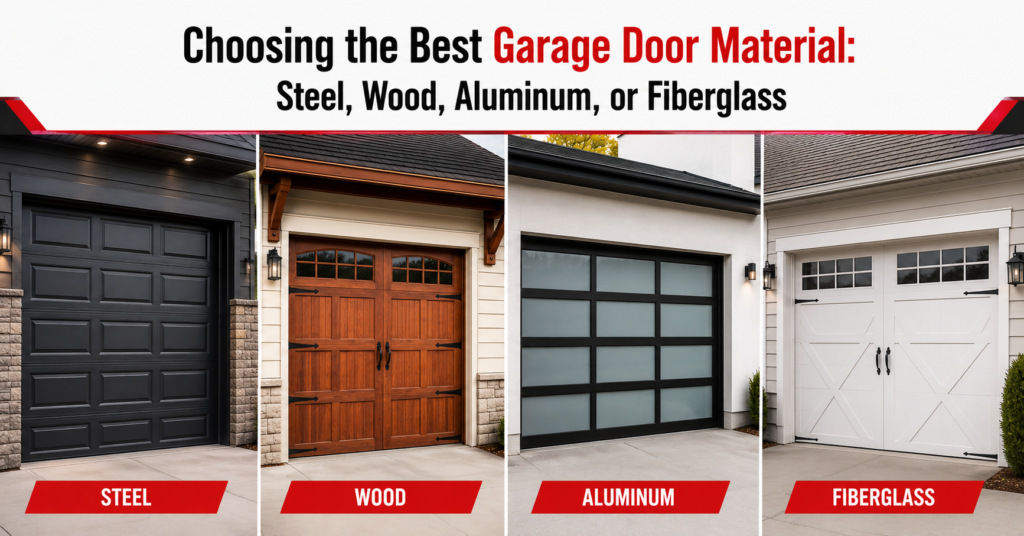
Steel, wood, aluminum, and fiberglass are the four most common garage door materials, and each one performs differently depending on your climate, your home’s style, and how much maintenance you’re willing to do. Here’s how the team at Doors In Motion breaks down the differences, so you can choose the right material with confidence.
Why Garage Door Material Matters More Than You Think
It’s easy to focus on color and panel style when picking a new garage door, but the material underneath is what determines the door’s real-world performance.
Material affects:
- Durability — how well the door resists dents, warping, and general wear
- Weather resistance — how it handles humidity, rain, snow, and freezing temperatures
- Maintenance needs — how often it needs painting, sealing, or rust treatment
- Insulation — how well it helps regulate temperature in an attached or heated garage
- Weight — which affects strain on the springs and opener over time
Since garage doors are a long-term part of your home, getting the material right the first time saves a lot of hassle down the road.
Steel Garage Doors
Steel is the most widely used garage door material in North America, and for good reason — it holds up well in almost any climate.
Pros of Steel
- Strong resistance to warping, cracking, and impact damage
- Low maintenance compared to wood — no sealing or staining required
- Available in single, double, or triple-layer construction, with insulated options that improve energy efficiency
- Wide range of styles, colors, and faux-wood finishes
Things to Consider
Steel can dent from impact, and while surface rust is uncommon on quality doors, scratches that expose bare metal should be touched up to prevent corrosion over time — something worth watching in a humid climate. Uninsulated steel doors can also feel cold to the touch and transfer more temperature into the garage during winter.
Wood Garage Doors
Wood garage doors bring a classic, high-end look that’s hard to replicate with other materials, especially on craftsman or traditional-style homes.
Pros of Wood
- Rich, natural appearance that’s fully customizable with stain or paint
- Can be crafted into detailed, custom designs
- Naturally provides decent insulation compared to non-insulated metal options
Things to Consider
Wood is the highest-maintenance material on this list. It absorbs moisture from humidity and rain, which can cause swelling, warping, or cracking if the door isn’t resealed regularly. In a climate with humid summers and wet springs, wood doors need more frequent attention than steel, aluminum, or fiberglass to keep them from deteriorating.
Aluminum Garage Doors
Aluminum has become popular for modern and contemporary home designs, especially doors with large glass panel sections.
Pros of Aluminum
- Naturally resistant to rust, since it doesn’t corrode the way steel can
- Lightweight, which reduces strain on the opener and springs over time
- Works well with full-view or glass-panel designs for a modern aesthetic
Things to Consider
Aluminum dents more easily than steel because it’s a softer metal, and it typically offers less insulation unless paired with an insulated glass or composite backing. It’s a strong choice for style and low maintenance, but not always the best fit if impact resistance or heavy insulation is a priority.
Fiberglass Garage Doors
Fiberglass is less common than the other three materials, but it offers a specific combination of benefits that make it worth considering, especially in coastal or high-humidity regions.
Pros of Fiberglass
- Highly resistant to denting, cracking, and warping
- Doesn’t rust or rot, making it a strong option for humid or salt-exposed climates
- Can be molded to mimic the look of natural wood grain
Things to Consider
Fiberglass can become brittle and crack in extreme cold if it’s not a quality, well-constructed panel, so it’s worth confirming the door is rated for your climate. It also generally offers less structural rigidity than steel, which is worth discussing with a professional installer.
Comparing Steel, Wood, Aluminum, and Fiberglass
| Feature | Steel | Wood | Aluminum | Fiberglass |
|---|---|---|---|---|
| Maintenance | Low | High | Low | Low |
| Weather Resistance | Strong | Moderate (needs sealing) | Strong (rust-resistant) | Strong |
| Dent Resistance | High | Moderate | Lower | High |
| Insulation Potential | High (with insulated core) | Moderate | Lower (unless backed) | Moderate to High |
| Style Flexibility | Wide range | Highly customizable | Best for modern designs | Wood-look options |
| Weight | Moderate | Heavy | Light | Moderate |
Which Material Is Best for a Cold, Humid Climate?
If you live somewhere with cold winters, humid summers, and everything in between — like much of the Chicagoland area — climate performance should weigh heavily in your decision.
Steel with an insulated core tends to be the most balanced choice for this kind of climate. It resists the swelling and warping that wood struggles with during humid stretches, holds up well through freezing temperatures and snow load, and requires far less seasonal upkeep.
Fiberglass is also a strong option if you want a wood-look aesthetic without the moisture sensitivity, though it’s worth confirming cold-weather performance with your installer.
Wood can absolutely work in this climate, but it requires a real maintenance commitment — regular resealing, prompt attention to cracks, and extra care during humid seasons — to avoid the swelling and warping issues we covered in our post on how rain and humidity affect garage door performance.
Aluminum is a great fit if a modern look with large glass panels is the priority, but it’s worth pairing with insulation if temperature regulation matters to you.
Matching Material to Your Home’s Style
Material and style go hand in hand:
- Traditional or craftsman homes often pair beautifully with wood or wood-look steel and fiberglass doors.
- Modern and contemporary homes tend to favor aluminum-and-glass designs for a clean, minimalist look.
- Classic suburban homes frequently use steel doors in carriage-house or raised-panel styles for a versatile, timeless appearance.
If you’re not sure what fits your home best, a professional installer can walk you through style options that work with your specific architecture.
Common Mistakes When Choosing a Garage Door Material
- Choosing based on looks alone. A beautiful wood door that isn’t properly maintained in a humid climate can deteriorate faster than expected.
- Skipping insulation considerations. An uninsulated door can make an attached garage significantly less comfortable, especially in extreme temperatures.
- Not accounting for door weight. Heavier materials like solid wood put more strain on springs and openers, which can affect long-term performance if the system isn’t sized correctly.
- Assuming all materials need the same maintenance. Wood needs a very different care routine than steel, aluminum, or fiberglass.
When to Talk to a Professional
Choosing between steel, wood, aluminum, and fiberglass depends on your climate, your home’s architecture, and how much maintenance you want to take on. A professional installer can help you weigh those factors properly and make sure the door, springs, and opener are all correctly matched to the material you choose.
Doors In Motion provides garage door installation, garage door service and repair, and ongoing garage door maintenance for homeowners throughout Illinois, with guidance on which material and style best fit your home and climate.
Frequently Asked Questions
What is the most durable garage door material?
Steel and fiberglass are generally the most durable, offering strong resistance to denting, warping, and cracking compared to wood or aluminum.
Which garage door material requires the least maintenance?
Steel, aluminum, and fiberglass all require significantly less maintenance than wood, which needs regular sealing or staining to prevent moisture damage.
Is wood a good choice for a humid climate?
Wood can work in a humid climate, but it requires more frequent maintenance to prevent swelling, warping, and cracking than steel, aluminum, or fiberglass.
Does garage door material affect insulation?
Yes. Steel doors with an insulated core generally offer the best insulation, while uninsulated aluminum and standard wood doors typically provide less temperature regulation.
Can aluminum garage doors rust?
No, aluminum doesn’t rust the way steel can, since it doesn’t contain iron. It’s naturally resistant to corrosion, making it a good option for humid or wet climates.
Contact Us for Garage Door Services and Repairs
At Doors in Motion Inc, we specialize in helping homeowners choose the perfect garage door based on their climate, lifestyle, and aesthetic preferences. Whether you’re in need of garage door repair or installation services, our team is here to guide you.
Call us today at (847) 222-0400 or contact us online for a free consultation.
Explore More Resources
By selecting the right materials and keeping your garage door in top condition with our garage door repair and maintenance services, you’ll enjoy long-lasting protection, improved energy efficiency, and better curb appeal.
Final Thoughts
There’s no single “best” garage door material — the right choice depends on your climate, your home’s style, and how much maintenance you’re willing to take on. Steel offers durability and low upkeep, wood brings unmatched character with more maintenance involved, aluminum suits modern designs with excellent rust resistance, and fiberglass holds up well in humid or variable climates.
If you’re weighing your options, Doors In Motion can help homeowners throughout the Chicagoland area choose and install the right garage door material for their home. A professional consultation makes it easy to match the door to your climate, style, and long-term needs.
Summary
The best garage door material depends on climate and maintenance preference. Steel offers durability and low upkeep, wood provides classic style but needs regular maintenance, aluminum resists rust and suits modern designs, and fiberglass holds up well in humid conditions while mimicking a wood-look finish.