
October 27, 2026
Garage door maintenance checklist for every season
A season-by-season garage door maintenance checklist for northern Illinois homes, with simple homeowner tasks and the jobs best left to a trained technician.
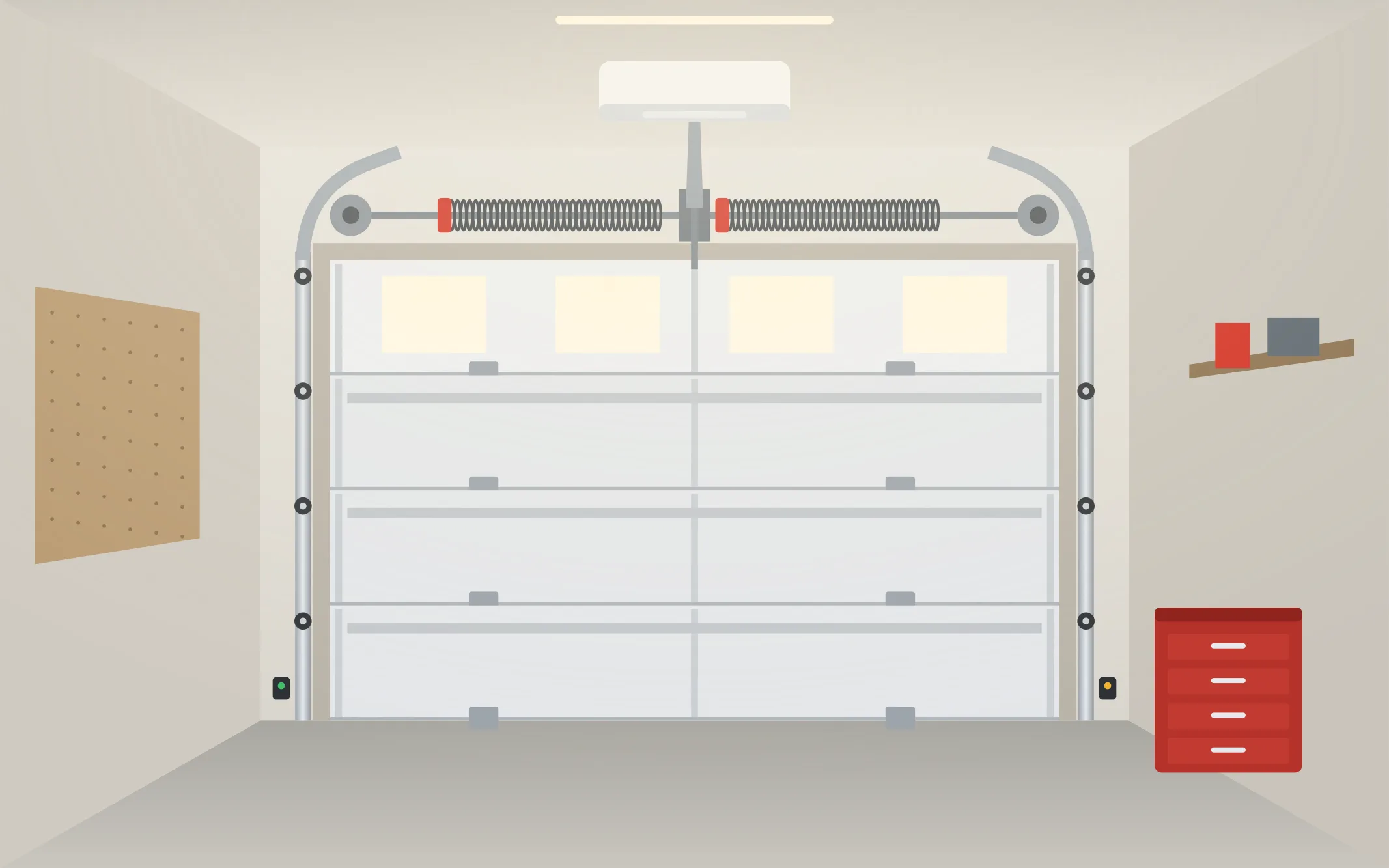
Your garage door probably opens and closes more than any other door in your home, and in northern Illinois it does that through subzero cold, spring thaws and humid summers. A little seasonal attention keeps it running smoothly, quietly and safely. Use this checklist to stay ahead of problems.
Safety first
Most of the tasks below are safe for homeowners. A few parts of the door are not. Springs, cables, drums and bottom brackets are under high tension and can cause serious injury. Look at them, but do not adjust, loosen or repair them yourself. If something looks wrong, call a technician.
Before any hands-on work, unplug the opener and keep the door closed.
Monthly quick checks
These take about five minutes:
- Watch the door move. It should open and close smoothly, evenly and without jerking.
- Listen. New squeaks, grinding or popping sounds are early warnings.
- Test the auto-reverse. Place a roll of paper towels or a 2x4 flat on the floor under the door and close it. The door should reverse when it touches the object.
- Test the photo eyes. Close the door and wave a broom through the sensor beam. The door should reverse.
- Look at the cables and springs for fraying, rust or gaps, without touching them.
Fall checklist: prepare for winter
Fall is the most important season for garage door maintenance in the Midwest. Cold weather is hard on springs, openers and seals, and it is better to find a weak part in October than on a January morning.
- Lubricate moving parts. Use a garage door lubricant or white lithium spray on hinges, roller stems, bearings and springs. Do not grease the tracks.
- Replace the bottom seal if it is cracked, flattened or torn. A good seal keeps out cold air, snow and mice.
- Check perimeter weatherstripping along the sides and top of the door.
- Test the balance. With the opener disconnected and the door closed, lift it halfway. A balanced door stays put. If it falls or rises, the springs need adjustment by a technician.
- Replace remote and keypad batteries before cold weather drains them.
- Clear leaves and debris from the tracks and the floor at the threshold.
- Schedule a professional tune-up if it has been more than a year.
Winter checklist: get through the cold
- Keep the threshold clear of snow and ice so the bottom seal does not freeze to the floor.
- Do not force a frozen door. If the seal is stuck, free it gently with a plastic scraper or a little warm air before pressing the opener button.
- Rinse away road salt that collects around the bottom of the door and the bottom brackets. Salt speeds up rust on cables and hardware.
- Watch for a heavy or slow door. Springs work hardest in the cold, and winter is when many of them fail. If you hear a loud bang or the door suddenly feels heavy, stop using it. Our spring repair page explains what to do next.
- Leave the opener force settings alone unless you know how to adjust them safely. A door that suddenly needs more force usually has another problem.
Spring checklist: recover from winter
- Wash the door inside and out with mild soap and water to remove salt and grime.
- Inspect the finish. Touch up chipped paint on steel doors to prevent rust. Wood doors may need sealing or repainting.
- Tighten hardware. Freeze and thaw cycles loosen bolts on the hinges and track brackets. Snug them up, but do not touch the bottom brackets.
- Clean the tracks with a damp cloth.
- Check the bottom seal again for winter damage.
- Re-test the auto-reverse and photo eyes.
Summer checklist: heat and humidity
- Lubricate again if the door is getting noisy.
- Clean the photo eye lenses. Dust, pollen and spider webs can trigger false reversals.
- Look for warping or swelling on wood doors after humid stretches.
- Check the opener. Listen for straining and make sure the rail and chain or belt are in good shape.
- Plan ahead. If your door or opener is near the end of its life, summer and early fall are good times to replace it before winter. You can explore styles with our design your door tool.
What a professional tune-up covers
Some maintenance tasks need training and tools. A professional tune-up typically includes:
- Spring tension and door balance adjustment
- Cable, drum and bottom bracket inspection
- Roller and hinge inspection, with replacement as needed
- Track alignment
- Full lubrication
- Opener force, travel and safety sensor checks
An annual tune-up typically costs $100-$180. Many homeowners schedule it each fall before winter. See what is included in our garage door maintenance services, and check our coupons page for current offers.
When to call a pro
Call a technician if the door fails the balance or auto-reverse test, if you see frayed cables or a gap in a spring, or if the door is suddenly loud, slow or uneven. These are not problems to wait out over a long winter. Doors in Motion has maintained garage doors for northern Illinois families since 1969. Book online to schedule your seasonal tune-up.