

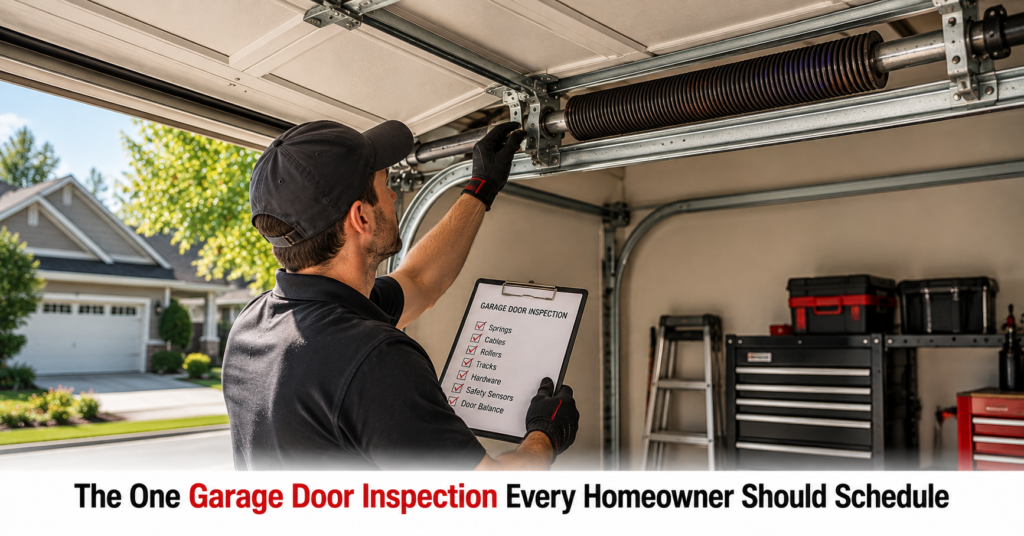
Most homeowners think about garage door maintenance only after something goes wrong — a strange noise, a slow response, a door that suddenly won’t budge. But there’s one simple step that prevents most of those emergencies in the first place: a professional annual inspection.
If you only do one thing for your garage door all year, this is it. This guide explains what a garage door inspection actually involves, why it matters more than people realize, and what to expect when you schedule one. At Doors In Motion Inc, this single visit is responsible for catching the vast majority of problems we see — long before they become expensive or unsafe.
Why One Inspection Makes Such a Big Difference
A garage door is made up of more than a dozen components working together under constant tension: springs, cables, rollers, tracks, hinges, an opener, and safety sensors. Each part wears down gradually, and most issues don’t show obvious symptoms until they’ve progressed significantly.
A trained technician knows exactly where to look and what subtle signs mean. What takes a homeowner months to notice — if they notice it at all — a professional can often spot in minutes. That’s the real value of a professional garage door inspection: it catches problems while they’re still small, simple, and inexpensive to address.
What a Proper Garage Door Inspection Covers
Spring Tension and Condition
Springs lose tension gradually with every cycle, and fatigued springs are one of the leading causes of sudden breakdowns. A technician checks both springs for wear, rust, and proper tension, something that’s genuinely unsafe for homeowners to test themselves.
Cable Condition
Cables work with the springs to lift the door evenly. A close inspection catches fraying strands long before a cable snaps, which can otherwise leave the door hanging unevenly or falling off track.
Roller and Track Alignment
Worn rollers and misaligned tracks cause jerky movement, noise, and uneven wear on other components. An inspection checks for cracked rollers, bent tracks, and the spacing between them.
Opener Performance
Technicians test the opener’s force settings, response time, and motor condition. A struggling opener is often a symptom of a different underlying issue, not the actual problem itself.
Safety Sensor Function
The auto-reverse sensors near the floor are tested to confirm the door stops and reverses properly when it detects an obstruction. This is one of the most important safety checks in the entire inspection.
Balance Testing
A balanced door should stay in place when lifted halfway with the opener disconnected. An inspection confirms this balance, which affects nearly every other part of the system.
Hardware and Fasteners
Loose bolts, brackets, and hinges are tightened during an inspection. Left alone, loose hardware contributes to rattling, misalignment, and uneven wear.
Weatherstripping and Seals
Cracked or worn weatherstripping lets in moisture, pests, and drafts. An inspection checks the seals along the bottom and sides of the door for damage.
Why This Inspection Should Happen Every Year
Garage doors operate far more often than most people realize, sometimes multiple times a day, every day. That adds up to thousands of cycles annually, each one placing a small amount of stress on every component.
An annual garage door tune-up catches the cumulative effect of that wear before it becomes a functional problem. For homeowners in Naperville and Aurora, where seasonal temperature swings add extra strain on hardware, this yearly check is especially valuable heading into winter.
Practical Tips to Get the Most Out of Your Inspection
- Mention any specific noises, delays, or unusual behavior you’ve noticed
- Avoid lubricating heavily right before the visit, since it can mask early wear patterns
- Clear the area around the door so the technician has full access to the tracks and hardware
- Ask for a written summary of findings, so you have a record for next year
- Schedule the inspection at the same time each year to build a consistent maintenance history
Common Mistakes Homeowners Make About Inspections
Assuming inspections are only needed when something’s wrong. Most value comes from catching issues before they cause visible problems.
Skipping the inspection because the door “seems fine.” Many of the most common issues, like spring fatigue, aren’t noticeable until they fail.
Only checking the opener, not the whole system. The opener is just one part of a larger mechanical system.
Waiting several years between inspections. Annual visits catch gradual wear; waiting longer lets smaller issues compound.
Trying to replicate the inspection with a quick DIY look. A visual glance catches obvious problems, but a trained inspection catches the subtle ones that cause most breakdowns.
Expert Advice: What Experienced Technicians Look For
Beyond the standard checklist, experienced technicians pay close attention to wear patterns that reveal how a door is actually being used day to day. Uneven roller wear, for example, often points to a slightly misaligned track that hasn’t caused noticeable symptoms yet. Catching that pattern early can prevent a much larger track repair down the road.
Another detail worth asking about: how your door’s cycle count compares to similar homes in your area. Garages used multiple times a day, such as in homes with teen drivers or home-based businesses, may benefit from a check every six months rather than annually.
What Happens If You Skip the Annual Inspection
Skipping this single visit doesn’t guarantee a breakdown, but it significantly increases the odds of one. Small issues that could have been caught early, like a fraying cable or a fatigued spring, tend to progress until they cause a sudden failure, often at an inconvenient time.
The cost of delay isn’t just a bigger repair. It’s also increased safety risk, since failing components like springs and cables can cause injury when they give out unexpectedly.
Frequently Asked Questions
How often should I schedule a garage door inspection?
Once a year is standard for most homes. Heavier daily use may call for a check every six months.
What’s included in a typical garage door inspection?
A thorough inspection checks springs, cables, rollers, tracks, the opener, safety sensors, balance, hardware, and weatherstripping.
Can I perform this inspection myself?
A basic visual check is useful between professional visits, but spring tension, cable condition, and balance testing require trained expertise to assess safely.
Does a new garage door still need annual inspections?
Yes. Even new doors benefit from early inspections to confirm proper installation and catch any issues before they develop into bigger ones.
What’s the biggest benefit of a yearly inspection?
It catches problems while they’re still minor, which keeps repairs simple and helps avoid unexpected breakdowns.
Contact Us for Garage Door Services and Repairs
At Doors in Motion Inc, we specialize in helping homeowners choose the perfect garage door based on their climate, lifestyle, and aesthetic preferences. Whether you’re in need of garage door repair or installation services, our team is here to guide you.
Call us today at (847) 222-0400 or contact us online for a free consultation.
Explore More Resources
By selecting the right materials and keeping your garage door in top condition with our garage door repair and maintenance services, you’ll enjoy long-lasting protection, improved energy efficiency, and better curb appeal.
Final Thoughts
A single annual inspection is one of the easiest ways to protect your garage door, your safety, and your budget from surprise repairs. It takes far less time than dealing with an emergency breakdown, and it consistently catches the small issues that cause most major problems. If it’s been a while since your last checkup, Doors In Motion Inc, can help you schedule the one inspection that makes the biggest difference all year.
Summary
A yearly garage door inspection checks springs, cables, rollers, tracks, the opener, safety sensors, and balance to catch gradual wear before it causes a breakdown. Scheduling this single visit annually is the most effective way homeowners can prevent costly repairs and maintain safe, reliable garage door performance.