

Reviewed by the Doors In Motion Inc Service Team — Licensed & Insured Garage Door Specialists Serving Illinois Since 1969.
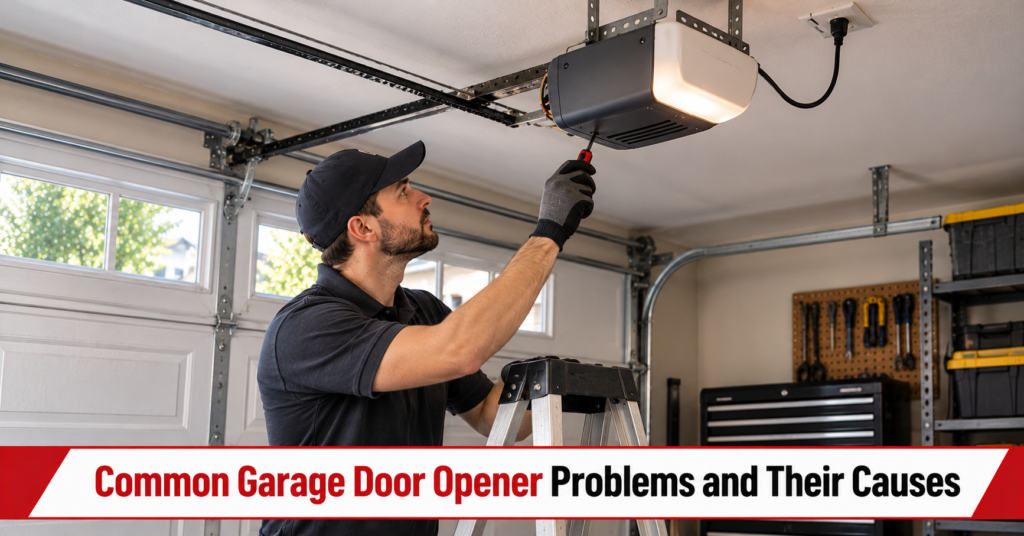
An opener that acts up can mean a dozen different things, from a simple sensor issue to a motor that’s genuinely struggling. Garage door opener problems come in a wide range of forms, and figuring out which one you’re dealing with is the first step toward an actual fix, rather than guessing.
Here’s how the team at Doors In Motion Inc breaks down the most common opener issues homeowners run into, and what’s usually behind each one.
How a Garage Door Opener Actually Works
At a basic level, the opener uses a motor to drive a trolley along a rail, which pulls or pushes the door through an arm connected to the top panel. Limit switches tell the opener when to stop at fully open or fully closed, and safety sensors monitor the door’s path for obstructions. Most opener problems trace back to one of these systems not working the way it’s supposed to.
Common Garage Door Opener Problems
The Opener Runs But the Door Doesn’t Move
This usually points to a disconnected or stripped trolley, meaning the motor is running but isn’t actually connected to the arm that moves the door.
The Door Reverses Immediately After Closing
If the door starts closing and immediately reverses, the limit switch settings may be off, telling the opener the door has hit an obstruction when it hasn’t, or the safety sensors may be misaligned.
The Opener Is Unusually Loud or Grinding
Grinding or knocking sounds often point to worn gears inside the motor unit, a chain or belt that’s lost proper tension, or a drive component that’s simply reaching the end of its lifespan.
The Door Only Opens or Closes Partway
This can indicate a limit switch that’s set incorrectly, an obstruction along the track, or a chain or belt that’s slipping rather than driving the door the full distance.
The Opener Doesn’t Respond to Any Command
If neither the remote nor the wall button gets a response, the issue often lies with the opener’s power supply or internal circuitry rather than the controls themselves. If only the remote fails while the wall button still works, that’s a more specific issue covered in our post on why garage doors stop responding to the remote.
Blinking Lights or Error Codes
Many modern openers use blinking patterns to indicate specific issues, often related to the safety sensors, similar to what we cover in our post on garage door safety features every homeowner should understand. Checking your opener’s manual for the blink pattern’s meaning is a useful first step.
The Motor Runs Hot or Shuts Off Mid-Cycle
An opener that overheats or cuts out partway through a cycle is often compensating for a door that’s harder to move than it should be, sometimes due to an unbalanced door putting extra strain on the motor.
What Causes Most Opener Problems
- Worn gears or a stripped trolley. Internal components wear down after enough cycles, especially in older openers.
- Chain or belt tension issues. A chain or belt that’s too loose or too tight can cause slipping, noise, or inconsistent movement.
- Limit switch misalignment. These settings drift over time or after a manual adjustment, causing the door to stop short or reverse unexpectedly.
- Sensor misalignment or dirt. A sensor that’s slightly out of position or covered in dust can trigger false reversals.
- A door that isn’t properly balanced. When the door itself is harder to move, the opener works harder to compensate, which can look like an opener problem even though the root cause is mechanical.
How to Narrow Down the Cause
- Watch the trolley when you activate the opener — does it move along the rail at all?
- Listen for grinding, clicking, or unusual noise during the cycle.
- Check whether the issue happens with both the remote and the wall button, or just one.
- Look at the safety sensor lights for any blinking or misalignment.
- Note whether the door itself seems to move smoothly by hand when disconnected from the opener.
When Opener Problems Point to Something Bigger
Sometimes what looks like an opener issue is actually a door problem. A door that’s crooked or hard to move manually, as covered in our post on why garage doors open crooked, or hardware that’s worn to the point described in our post on what happens when garage door hardware starts wearing out, can both cause the opener to strain or behave unpredictably even if the opener itself is in good condition.
DIY vs. Professional for Opener Issues
Basic troubleshooting, like checking sensor alignment or testing the wall button, is reasonable for most homeowners to handle. But issues involving the internal motor, gears, or wiring should go to a professional, a distinction we cover in more detail in our post on why homeowners trust professional garage door repair instead of DIY.
How to Prevent Common Opener Problems
- Keep the safety sensors clean and properly aligned
- Check chain or belt tension periodically, according to the manufacturer’s guidance
- Keep the door itself properly balanced, since a strained door adds unnecessary wear to the opener
- Include the opener in your regular maintenance routine, as outlined in our complete homeowner’s guide to garage door maintenance
Local Climate Factors Affecting Opener Reliability
Weather plays a real role in opener performance over time. As covered in our posts on preparing for freezing temperatures and how rain and humidity affect garage door performance, cold and moisture both add stress to opener electronics and mechanical components alike. Homeowners in Naperville and Schaumburg often see humidity-related sensor issues during summer, while those in Aurora and Elgin may notice cold-related opener strain during winter cold snaps.
When to Call Doors In Motion
If your opener is grinding, straining, stopping mid-cycle, or not responding at all, it’s worth having a professional take a look. Doors In Motion Inc provides garage door opener repair and service, along with general garage door service and repair, for homeowners throughout Illinois.
Frequently Asked Questions
What’s the most common cause of garage door opener problems?
Worn gears, chain or belt tension issues, and limit switch misalignment are among the most common causes, though a poorly balanced door can also strain the opener and cause similar symptoms.
Why does my garage door opener run but the door doesn’t move?
This typically points to a disconnected or stripped trolley, meaning the motor is running but isn’t properly connected to the door.
Should I be concerned if my opener makes grinding noises?
Yes. Grinding often indicates worn gears or a failing drive component, and addressing it early usually prevents a more significant motor issue later.
Can a blinking light on my opener tell me what’s wrong?
Often, yes. Many openers use specific blink patterns to indicate issues like sensor misalignment, and checking the manual for your model can help narrow down the cause.
When should I call a professional for an opener problem?
If the issue involves the internal motor, gears, wiring, or persists after basic troubleshooting like checking sensors and the wall button, it’s time for a professional diagnosis.
Contact Us for Garage Door Services and Repairs
At Doors in Motion Inc, we specialize in helping homeowners choose the perfect garage door based on their climate, lifestyle, and aesthetic preferences. Whether you’re in need of garage door repair or installation services, our team is here to guide you.
Call us today at (847) 222-0400 or contact us online for a free consultation.
Explore More Resources
By selecting the right materials and keeping your garage door in top condition with our garage door repair and maintenance services, you’ll enjoy long-lasting protection, improved energy efficiency, and better curb appeal.
Final Thoughts
Garage door opener problems range from simple sensor fixes to genuine mechanical wear inside the motor unit, and figuring out which category you’re dealing with makes all the difference. Careful observation — how the door moves, what sounds you hear, and whether both controls are affected — usually points toward the answer.
If your opener isn’t working the way it should, Doors In Motion Inc is available to help homeowners throughout the Chicagoland area diagnose and repair the issue.
Summary
Common garage door opener problems include a motor that runs without moving the door, unexpected reversing, grinding noises, partial movement, and unresponsive controls. These are typically caused by worn gears, chain or belt tension issues, limit switch misalignment, or sensor problems, and persistent issues should be diagnosed by a professional.