

Reviewed by the Doors In Motion Service Team — Licensed & Insured Garage Door Specialists Serving Illinois Since 1969.
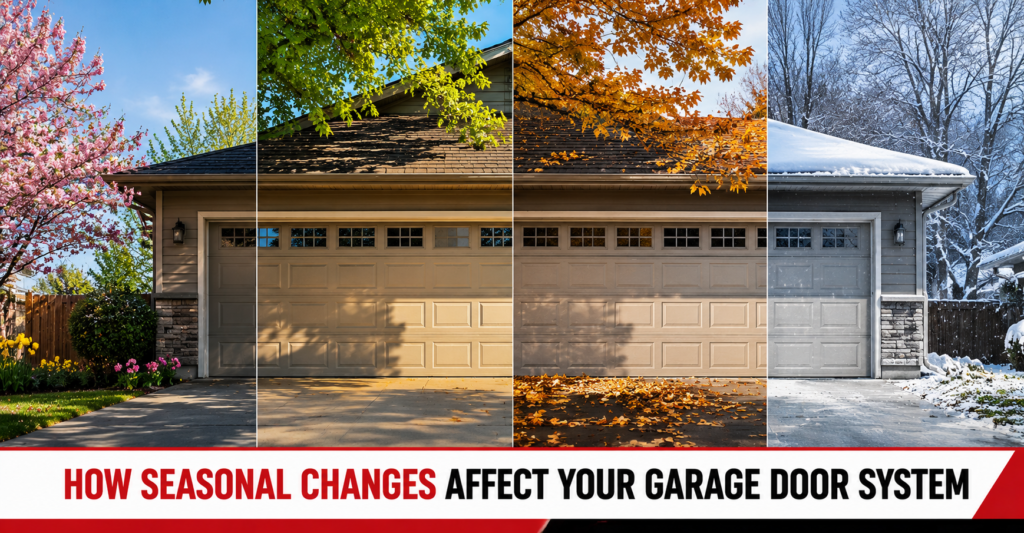
A garage door doesn’t experience the year the way we do, in four separate seasons. It experiences one continuous cycle of temperature swings, moisture changes, and shifting stress on its materials — and garage door seasonal changes affect nearly every component differently depending on what time of year it is.
We’ve covered specific seasons in detail elsewhere, but here, the team at Doors In Motion looks at the full picture: why your door reacts to the calendar at all, and which parts of the year actually put it under the most strain.
Why Your Garage Door Reacts to the Seasons at All
A garage door system is built from a mix of materials that each respond to weather differently. Steel expands and contracts with temperature. Rubber weatherstripping stiffens in cold and degrades under UV exposure. Lubricants thicken or thin depending on temperature. Electronics are sensitive to both moisture and cold. None of these materials react to weather in isolation — they’re all connected in one working system, which is why a change in one season shows up as wear somewhere else months later.
How Each Season Affects Your Garage Door System
Spring: Moisture, Pollen, and Post-Winter Recovery
Spring brings a mix of challenges that don’t get as much attention as summer or winter. Melting snow and spring rain increase moisture around the base of the door, while pollen and debris build up quickly in the tracks. It’s also the season when winter’s cumulative stress on springs and cables tends to become noticeable, since components weakened by cold finally show symptoms once regular use resumes at a normal pace.
Summer: Heat, Humidity, and Heavy Use
Summer heat and humidity accelerate rust, swell wood components, and stress the opener motor, especially during peak-use months. We cover this in detail in our post on summer garage door maintenance tips, including how to keep the system running smoothly through the hottest stretches.
Fall: Preparing for the Shift Ahead
Fall is a transition season more than a stress season on its own, but it’s the most important window for catching issues before winter arrives. Cooling temperatures start to reveal how well components held up over summer, making it the ideal time to tighten hardware, inspect cables, and switch to a cold-weather lubricant before the first hard freeze.
Winter: Cold Contraction and Freezing Risk
Cold temperatures cause metal components to contract and become more brittle, significantly raising the risk of spring failure. Our guide on preparing your garage door for snow and freezing temperatures covers the specific steps for this season in depth.
The Two Forces Behind Most Seasonal Wear: Temperature and Moisture
Nearly every seasonal effect on a garage door traces back to two root forces: temperature change and moisture exposure. Temperature swings cause metal to expand and contract, directly affecting spring tension and cable stress. Moisture, covered in more detail in our post on how rain and humidity affect garage door performance, drives rust, swelling, and sensor issues. Understanding that these two forces are behind almost everything makes it easier to recognize why a symptom in one season is often connected to conditions from months earlier.
How Seasonal Transitions Are Harder on Your Door Than Steady Weather
Interestingly, it’s often the shift between seasons, not the extremes themselves, that puts the most stress on a garage door system. A sharp freeze-thaw cycle in early spring, or a sudden cold snap after a mild fall, forces components to expand and contract repeatedly in a short window, which tends to accelerate wear more than steady cold or steady heat on their own. This is one reason issues often seem to appear “out of nowhere” right at the season’s turn.
Which Components Are Most Affected by Seasonal Change
Not every part responds to seasonal shifts the same way, which we cover in more depth in our post on why garage door components wear out at different rates. In general, weatherstripping and springs are the most seasonally sensitive; sensors and electronics are moderately affected by humidity and cold, and structural components like tracks and brackets are the least seasonally reactive.
A Season-by-Season Quick Reference
| Season | Main Stress Factor | Where to Learn More |
|---|---|---|
| Spring | Moisture, pollen, post-winter wear surfacing | This post |
| Summer | Heat, humidity, heavy use | Summer maintenance guide |
| Fall | Transition prep window | Complete maintenance guide |
| Winter | Cold contraction, spring stress | Freezing temperatures guide |
How to Build a Seasonal Maintenance Rhythm
Our complete homeowner’s guide to garage door maintenance covers the full task-by-task checklist for each season. The key idea worth adding here is timing: aligning your maintenance checks with the transitions between seasons, rather than the middle of them, tends to catch developing issues before the next season’s stress makes them worse.
Local Seasonal Patterns Worth Knowing
Illinois experiences a particularly full range of seasonal extremes, which makes this system-wide view especially relevant for local homeowners. Those in Elgin and Naperville often notice spring moisture issues first, while homeowners in Arlington Heights and Aurora may see winter-to-spring freeze-thaw stress show up earlier than expected. Keeping seasonal timing in mind helps explain why two similar homes can experience different wear patterns depending on their specific exposure.
When to Call Doors In Motion
If your garage door seems to act up at the same time every year, or right as the seasons shift, that pattern is worth mentioning to a technician. Doors In Motion provides garage door service and repair and ongoing garage door maintenance for homeowners throughout Illinois, with seasonal timing built into how we approach inspections.
Frequently Asked Questions
Which season is hardest on a garage door?
It depends on the component, but the transitions between seasons, especially the freeze-thaw stress of early spring, often cause more sudden issues than the extremes of summer or winter alone.
Why does my garage door act up right when the weather changes?
Rapid temperature swings during seasonal transitions cause metal components to expand and contract quickly, which can reveal wear that built up gradually over the previous season.
Does spring really affect garage doors as much as winter or summer?
Yes, though differently. Spring combines moisture, pollen buildup, and the emergence of winter-related wear, making it an important but often overlooked season for garage door issues.
How can I tell if a problem is seasonal or something else?
If an issue consistently appears around the same time each year, it’s likely tied to seasonal temperature or moisture patterns rather than a one-off mechanical failure.
Should my maintenance schedule change with the seasons?
Yes. Timing checks around seasonal transitions, rather than sticking to a flat schedule, helps catch issues before the next season’s stress makes them more noticeable.
Contact Us for Garage Door Services and Repairs
At Doors in Motion Inc, we specialize in helping homeowners choose the perfect garage door based on their climate, lifestyle, and aesthetic preferences. Whether you’re in need of garage door repair or installation services, our team is here to guide you.
Call us today at (847) 222-0400 or contact us online for a free consultation.
Explore More Resources
By selecting the right materials and keeping your garage door in top condition with our garage door repair and maintenance services, you’ll enjoy long-lasting protection, improved energy efficiency, and better curb appeal.
Final Thoughts
Your garage door doesn’t experience the year in isolated chunks — it experiences one continuous cycle of temperature and moisture changes that quietly shape how every component ages. Understanding these seasonal patterns, and especially the stress that comes with the transitions between seasons, helps explain why issues so often seem to appear right when the weather turns.
If your garage door tends to act up around the same time each year, Doors In Motion is available to help homeowners throughout the Chicagoland area get ahead of it before the next seasonal shift.
Summary
Seasonal changes affect a garage door system through temperature swings and moisture exposure, which stress springs, cables, weatherstripping, and sensors differently throughout the year. The transitions between seasons, particularly spring freeze-thaw cycles, often cause more sudden wear than steady summer heat or winter cold alone.