

Reviewed by the Doors In Motion Service Team — Licensed & Insured Garage Door Specialists Serving Illinois Since 1969.
Springs and cables tend to get most of the attention when people think about garage door problems, but garage door hardware wear — the slower breakdown of rollers, hinges, tracks, and brackets — is just as important to understand. Unlike a sudden spring failure, hardware wear tends to progress in stages, giving you a real window to catch it before it turns into a bigger repair.
Here’s how the team at Doors In Motion breaks down what actually happens as garage door hardware ages, and what each stage looks like.
What Counts as Garage Door “Hardware”?
For this post, hardware refers to the mechanical components that guide and support the door’s movement: rollers, hinges, tracks, mounting brackets, and the fasteners holding it all together. This is separate from the springs and cables, which we cover in more depth in our post on what happens when a garage door cable snaps, and separate from the opener and electronics covered in our post on why garage doors stop responding to the remote.
How Hardware Wear Typically Progresses
Stage One: Early, Easy-to-Miss Wear
At this stage, the door still operates normally. You might notice a very faint squeak, a slight looseness if you wiggle a hinge by hand, or a roller that feels a touch less smooth than the others. Nothing about daily use feels different yet.
Stage Two: Noticeable Wear
Sounds become more consistent rather than occasional. You might notice a bit more vibration during operation, a hinge that visibly moves more than it should, or a roller that looks slightly worn or off-center in its track. The door still works, but something feels a little rougher than before.
Stage Three: Advanced Wear and Failure Risk
At this point, hardware wear starts affecting how the door actually moves. Rollers may bind or stick in the track, hinges can crack or separate slightly at the joint, and brackets may loosen enough to shift out of position. This is the stage where hardware wear starts to meaningfully increase the risk of a bigger failure.
What Each Type of Hardware Looks Like as It Wears
Rollers
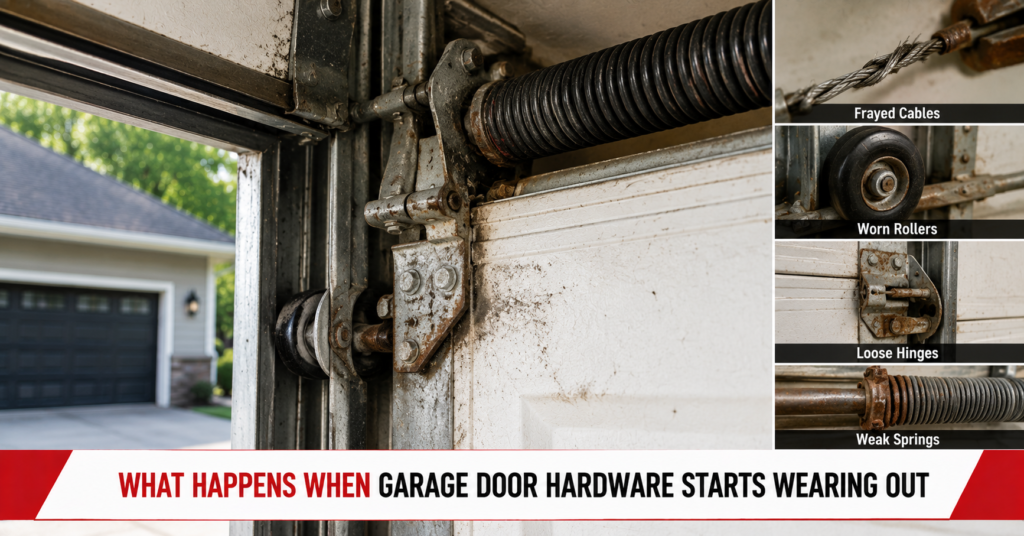
Worn rollers often develop flat spots, cracks, or a wobble as they turn. Nylon rollers tend to wear more gradually and quietly, while steel rollers may start making more noise as bearings inside them wear down.
Hinges
Hinge wear typically shows up as visible play or looseness at the joint, sometimes with light surface rust contributing to the wear over time, especially after a humid season.
Tracks and Brackets
Tracks can develop minor dents or bends from years of vibration, while brackets may loosen at their mounting points, allowing slight shifts in alignment that show up as a door that no longer moves in a perfectly straight line.
What Happens If Worn Hardware Is Ignored
Increased Strain on the Opener
As hardware wears, the door requires more effort to move smoothly, which means the opener works harder on every single cycle than it was designed to.
Uneven Wear Spreading to Other Components
A single worn roller or loose bracket rarely stays isolated. Over time, it changes how force is distributed across the rest of the system, accelerating wear on nearby hardware.
Higher Risk of a Sudden Failure
While hardware wear itself tends to be gradual, ignoring advanced-stage symptoms increases the chances of a more sudden issue, like a roller jumping the track or a hinge failing completely during operation.
How Hardware Wear Differs From Spring or Cable Failure
Spring and cable failures tend to happen more suddenly and are tied to tension and cycle counts, as we cover in our post on how daily garage door use affects its lifespan. Hardware wear, by comparison, is usually a slower, more visible progression — which is exactly why catching it in Stage One or Two makes such a difference in how simple the eventual repair is.
How to Slow Down Hardware Wear
- Lubricate rollers, hinges, and tracks regularly, as outlined in our complete homeowner’s guide to garage door maintenance
- Tighten visible, accessible hardware periodically rather than waiting for looseness to become obvious
- Address early-stage noise or wobble promptly instead of waiting for it to worsen
- Keep tracks clear of debris that can accelerate roller wear
When Hardware Wear Requires Professional Replacement
Basic upkeep, like lubrication and tightening accessible bolts, is generally safe to handle yourself. But once hardware reaches Stage Three — binding rollers, cracked hinges, or shifted brackets — professional replacement is typically the right call, both for safety and to prevent the wear from spreading further. Our post on why homeowners trust professional garage door repair instead of DIY covers this distinction in more detail.
How Usage and Climate Accelerate Hardware Wear
Hardware wear speeds up with frequent use and seasonal weather extremes. As covered in our posts on preparing for freezing temperatures and how rain and humidity affect garage door performance, cold and moisture both add stress on top of normal mechanical wear. Homeowners in Schaumburg and Naperville often see humidity-related hinge and bracket wear appear first, while those in Elgin and Arlington Heights may notice cold-related roller stiffness show up earlier in the season.
When to Call Doors In Motion
If your garage door hardware has reached the point of binding, visible cracking, or shifted brackets, it’s worth professional attention before the wear spreads further. Doors In Motion provides garage door service and repair and ongoing garage door maintenance for homeowners throughout Illinois, including hardware inspection and replacement.
Frequently Asked Questions
How do I know if my garage door hardware is wearing out?
Early signs include faint noise, slight looseness in hinges, or a roller that feels less smooth than the others. These often appear well before the door’s operation is noticeably affected.
Is worn garage door hardware dangerous?
In the early stages, it’s usually more of a maintenance issue than a safety one. But advanced wear, like binding rollers or cracked hinges, does increase the risk of a sudden failure and should be addressed.
Can I replace worn rollers or hinges myself?
Basic hardware replacement is sometimes manageable for homeowners, but if wear has progressed to binding or misalignment, professional replacement is the safer option.
Does hardware wear happen faster with frequent garage door use?
Yes. More frequent use adds more wear cycles to rollers, hinges, and tracks, similar to how frequent use affects springs and cables.
How is hardware wear different from a spring or cable problem?
Hardware wear tends to progress gradually and visibly over time, while spring and cable issues are more closely tied to tension and cycle counts, and can fail more suddenly.
Contact Us for Garage Door Services and Repairs
At Doors in Motion Inc, we specialize in helping homeowners choose the perfect garage door based on their climate, lifestyle, and aesthetic preferences. Whether you’re in need of garage door repair or installation services, our team is here to guide you.
Call us today at (847) 222-0400 or contact us online for a free consultation.
Explore More Resources
By selecting the right materials and keeping your garage door in top condition with our garage door repair and maintenance services, you’ll enjoy long-lasting protection, improved energy efficiency, and better curb appeal.
Final Thoughts
Garage door hardware wear rarely happens overnight. It moves through recognizable stages, from a faint noise to visible looseness to genuine binding or failure risk, giving you a real opportunity to catch it early if you’re paying attention.
If your garage door’s rollers, hinges, or tracks are showing signs of wear, Doors In Motion is available to help homeowners throughout the Chicagoland area address it before it becomes a bigger repair.
Summary
Garage door hardware wear progresses through stages, starting with faint noise or slight looseness in rollers and hinges, advancing to visible wobble and misalignment, and eventually reaching binding or cracked components if left unaddressed. Catching hardware wear early, through regular lubrication and prompt attention to noise, prevents it from spreading to other parts of the system.