

Reviewed by the Doors In Motion Service Team — Licensed & Insured Garage Door Specialists Serving Illinois Since 1969.
A garage door can look and sound perfectly normal while quietly developing a problem underneath. That’s what makes a garage door safety check worth doing every so often — not because your door is necessarily in trouble, but because the warning signs aren’t always obvious until something actually fails.
Here’s how the team at Doors In Motion recommends checking whether your garage door is genuinely safe to use, and what to do if it isn’t.
Why Garage Door Safety Isn’t Always Obvious
A garage door can technically still open and close while its lifting system is quietly losing balance. Springs weaken gradually, cables fray slowly, and sensors can drift out of alignment without any dramatic sign that something’s wrong — until the day it finally shows up as a stuck door, a crooked lift, or worse.
The Balance Test: The Single Best Safety Indicator
If you only do one safety check, make it this one. Disconnect the automatic opener using the release cord, then lift the door manually to about waist height and let go.
- A balanced door stays roughly in place.
- An unbalanced door drifts downward or shoots upward on its own.
An unbalanced door means the springs are no longer sharing the load correctly, which puts extra strain on the opener and increases the risk of a sudden failure.
Visual and Physical Warning Signs to Check
Cables and Springs
Look for visible fraying, rust, or gaps in the coils of the springs. Cables should sit cleanly on their drums without any looseness or visible wear.
Tracks and Rollers
Check that the tracks are straight, free of dents, and securely mounted. Rollers should turn smoothly without cracking, flat spots, or excessive wobble.
Weatherstripping and Panels
While not a direct safety issue, cracked or missing weatherstripping and warped panels can be early signs of a door under more stress than it should be.
Testing the Auto-Reverse Safety Sensors
This test matters most if children or pets use the garage regularly.
- Place a block of wood or a paper towel roll in the door’s path and close it. The door should reverse immediately on contact.
- Wave your hand in front of the photo-eye sensors near the bottom of the tracks while the door is closing. It should stop and reverse without any contact at all.
If either test fails, the door should not be used with the automatic opener until the sensors are repaired.
Listening for Warning Sounds
Grinding, popping, or a sudden loud bang are all signs worth taking seriously. A popping or snapping sound in particular can indicate a cable or spring issue, similar to what we cover in our post on what happens when a garage door cable snaps.
Signs Your Garage Door Is NOT Safe to Use
Mechanical Warning Signs
- A crooked or uneven lift, as covered in our post on why garage doors open crooked
- A door that’s stuck open or closed, especially if it happened suddenly
- Visible fraying or a snapped cable
- A door that drops quickly instead of lowering smoothly
Sensor and Electrical Warning Signs
- Failed auto-reverse sensor tests
- A wall button or remote that stops working entirely, which we cover in our post on why garage doors stop responding to the remote, since this can sometimes point to a deeper opener issue
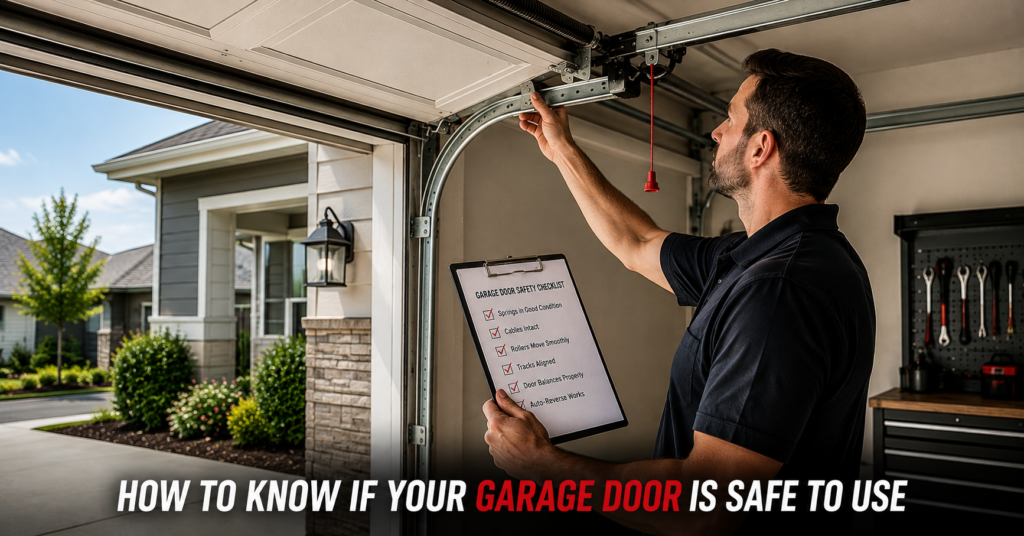
A Quick Safety Checklist You Can Do Today
- Run the balance test
- Inspect cables and springs for visible wear
- Check that tracks are straight and rollers move freely
- Test the auto-reverse sensors
- Listen for grinding, popping, or banging during operation
- Confirm the door lowers smoothly, not suddenly
What to Do If Your Door Fails the Safety Check
Stop using the automatic opener immediately, and avoid forcing the door open or closed by hand. If the door is stuck open, take basic security steps, similar to what we outline in our post on what to do if your garage door breaks at night, and contact a professional. Depending on the severity, this may be a same-day priority.
How Regular Maintenance Keeps Your Door Safe
Most safety issues don’t appear overnight — they build gradually through normal wear. Our complete homeowner’s guide to garage door maintenance covers the full seasonal routine, but the core habits that keep a door safe are simple: periodic balance testing, regular lubrication, and prompt attention to small noises or hesitation before they become bigger problems.
Local Factors That Affect Garage Door Safety Over Time
Illinois weather adds real wear to garage door systems over time. As covered in our posts on preparing for freezing temperatures and how rain and humidity affect garage door performance, cold winters stress springs and cables, while humid summers accelerate rust and swelling. Homeowners in Elgin and Naperville often see humidity-related wear show up first, while those in Arlington Heights and Aurora may notice cold-related safety issues earlier in the season — both good reasons to run a safety check at each seasonal shift.
When to Call Doors In Motion
If your garage door fails any part of this safety check, it’s worth having a professional take a closer look before continuing to use it. Doors In Motion provides garage door service and repair, spring repair, and safety sensor service for homeowners throughout Illinois, with same-day appointments available when a safety issue can’t wait.
Frequently Asked Questions
How often should I check if my garage door is safe to use?
A quick check every few months is reasonable, with a more thorough inspection at the start of each season, since weather changes add extra stress to the system.
What’s the fastest way to check if my garage door is safe?
The balance test is the quickest, most reliable indicator. An unbalanced door is one of the clearest signs that something needs professional attention.
Is it safe to use my garage door if the auto-reverse sensors fail the test?
No. If the door doesn’t reverse properly when an object or your hand is in its path, avoid using the automatic opener until the sensors are repaired.
Can a garage door look fine but still be unsafe?
Yes. Springs and cables can weaken gradually without any obvious visual sign until the door suddenly fails, which is why periodic safety checks matter even when nothing seems wrong.
What should I do if my garage door fails a safety check?
Stop using the automatic opener, avoid forcing the door by hand, and contact a professional for an inspection, especially if the issue involves springs, cables, or the safety sensors.
Contact Us for Garage Door Services and Repairs
At Doors in Motion Inc, we specialize in helping homeowners choose the perfect garage door based on their climate, lifestyle, and aesthetic preferences. Whether you’re in need of garage door repair or installation services, our team is here to guide you.
Call us today at (847) 222-0400 or contact us online for a free consultation.
Explore More Resources
By selecting the right materials and keeping your garage door in top condition with our garage door repair and maintenance services, you’ll enjoy long-lasting
Final Thoughts
A garage door doesn’t have to look obviously broken to be unsafe. Regular checks — balance testing, a visual inspection of cables and springs, and confirming the safety sensors work correctly — catch problems long before they turn into a stuck door or a real hazard.
If your garage door doesn’t pass one of these checks, Doors In Motion is available to help homeowners throughout the Chicagoland area get it back to a safe, reliable condition.
Summary
To check if a garage door is safe to use, run a balance test, inspect cables and springs for wear, confirm the tracks and rollers move freely, and test the auto-reverse safety sensors. An unbalanced door, failed sensor test, or visible cable damage means the door should not be used until a professional inspects it.