

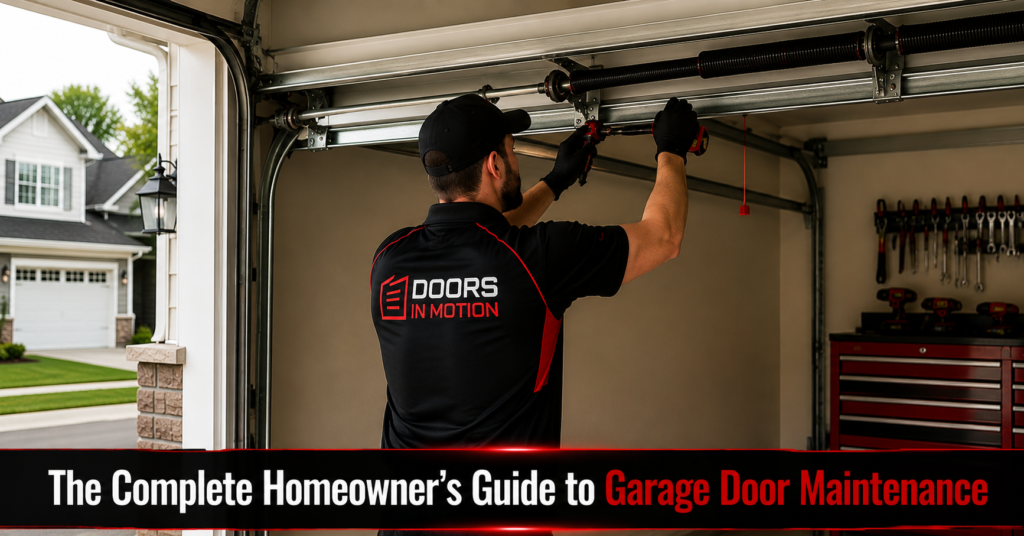
Reviewed by the Doors In Motion Service Team — Licensed & Insured Garage Door Specialists Serving Illinois Since 1969.
A little routine garage door maintenance goes a long way, but it’s easy to lose track of what actually needs attention and when. This guide pulls everything together in one place — what to check, how often, and which tasks are safe to handle yourself versus when it’s time to call a professional.
Consider this your year-round reference from the team at Doors In Motion, with links throughout to deeper guides on specific topics if you want to go further on any one of them.
Why Routine Garage Door Maintenance Matters
A garage door is one of the largest moving parts of your home, and it takes daily wear that’s easy to overlook. Regular maintenance keeps the springs, cables, tracks, and opener working in balance, which reduces the chances of an unexpected same-day repair and extends the life of the entire system.
A Season-by-Season Maintenance Checklist
Spring Maintenance Tasks
After winter, check for rust on hardware, inspect weatherstripping for cracks caused by cold temperatures, and lubricate any parts that may have stiffened over the colder months.
Summer Maintenance Tasks
Heat and humidity are hard on garage doors. Our post on summer garage door maintenance tips covers this in detail, but the essentials include testing the door’s balance, lubricating rollers and hinges, and checking the auto-reverse safety sensors.
Fall Maintenance Tasks
Before winter arrives, this is the time to tighten loose hardware, inspect cables for fraying, and confirm the opener and battery backup are functioning properly.
Winter Maintenance Tasks
Cold weather adds real stress to springs and cables. Our guide on preparing your garage door for snow and freezing temperatures walks through switching to a cold-weather lubricant, checking the bottom seal, and preventing the door from freezing to the floor.
Core Maintenance Tasks Every Homeowner Should Know
Lubrication
Rollers, hinges, springs, and tracks should be lubricated every three months with a silicone-based or lithium-based lubricant — never household oil or WD-40, which attract debris and break down quickly.
Balance Testing
Disconnect the opener, lift the door halfway, and let go. A balanced door should stay in place. If it drifts, the springs likely need professional attention.
Track and Roller Inspection
Look for dents, debris, or misalignment in the tracks, and check rollers for cracks or flat spots that can cause a rough, jerky motion.
Weatherstripping Checks
Inspect the bottom, side, and top seals for cracking or gaps. Worn weatherstripping lets in moisture and temperature swings that accelerate wear on other components.
Safety Sensor Testing
Test the auto-reverse sensors regularly by placing an object in the door’s path while closing. The door should stop and reverse immediately.
How Climate Affects Your Maintenance Schedule
Illinois weather puts real seasonal demands on garage door systems. As covered in our post on how rain and humidity affect garage door performance, moisture accelerates rust and swelling, while freezing temperatures stress springs and cables. Homeowners in Naperville and Elgin tend to see more humidity-related wear, while those in Arlington Heights and Aurora often notice more cold-weather issues — which is why a maintenance schedule that accounts for your specific climate exposure works better than a generic one-size-fits-all routine.
Choosing the Right Materials and Components for Long-Term Durability
Maintenance needs also depend on what your door is made of and how it’s built. Our guide on choosing the best garage door material breaks down how steel, wood, aluminum, and fiberglass each hold up differently, while our comparison of insulated vs non-insulated garage doors covers how insulation affects temperature stability and long-term wear. If you’re due for a replacement, these are worth reading before deciding on your next door.
Common Problems That Signal It’s Time for Repair, Not Maintenance
Some issues go beyond routine upkeep and need professional repair:
- A door that lifts unevenly or opens crooked, which we cover in detail in our post on why garage doors open crooked
- A cable that’s frayed, slipped, or already snapped — see our guide on what happens when a garage door cable snaps
- Grinding, binding, or a door that won’t fully open or close
DIY Maintenance vs Professional Service: Where the Line Is
Basic maintenance — lubrication, cleaning, tightening visible hardware, testing sensors — is safe for most homeowners to handle. Anything involving springs, cables, or a door that’s already malfunctioning should go to a trained technician. Our post on why homeowners trust professional garage door repair instead of DIY covers this distinction in more depth, including the real risks involved in attempting spring or cable work yourself.
How to Choose a Company for Professional Maintenance and Repair
When you do need a professional, not all companies offer the same level of expertise. Our guide on how to choose the best garage door repair company near you walks through what to look for, and our companion post with specific questions to ask before hiring gives you a ready-made script for that first phone call.
A Simple Year-Round Maintenance Checklist
- Lubricate moving parts every three months
- Test door balance twice a year
- Inspect weatherstripping each spring and fall
- Test safety sensors monthly
- Schedule a full professional inspection annually
When to Call Doors In Motion
If your maintenance checks turn up a worn cable, an unbalanced door, or any issue beyond basic upkeep, it’s time for a professional. Doors In Motion provides garage door service and repair, spring repair, garage door opener service, and ongoing garage door maintenance for homeowners throughout Illinois, with same-day appointments available when something can’t wait.
Frequently Asked Questions
How often should I perform garage door maintenance?
A quick check of lubrication, balance, and safety sensors every three months is a good baseline, with a full professional inspection once a year.
What garage door maintenance tasks are safe to do myself?
Lubricating moving parts, cleaning tracks, tightening visible hardware, and testing the safety sensors are all safe for most homeowners to handle.
Does garage door maintenance really prevent bigger repairs?
Yes. Catching worn rollers, fraying cables, or a developing imbalance early often prevents a same-day emergency repair down the road.
Should maintenance change with the seasons?
Yes. Cold weather stresses springs and cables, while humidity accelerates rust and swelling, so a seasonal approach catches issues a generic checklist might miss.
When should I stop doing maintenance myself and call a professional?
Any time springs, cables, or a crooked or malfunctioning door are involved, it’s time to call a trained technician rather than attempting a DIY fix.
Contact Us for Garage Door Services and Repairs
At Doors in Motion Inc, we specialize in helping homeowners choose the perfect garage door based on their climate, lifestyle, and aesthetic preferences. Whether you’re in need of garage door repair or installation services, our team is here to guide you.
Call us today at (847) 222-0400 or contact us online for a free consultation.
Explore More Resources
By selecting the right materials and keeping your garage door in top condition with our garage door repair and maintenance services, you’ll enjoy long-lasting protection, improved energy efficiency, and better curb appeal.
Final Thoughts
Consistent garage door maintenance — done seasonally and paired with the right professional support when needed — keeps your door safer, quieter, and less likely to fail unexpectedly. Use this guide as your year-round reference, and lean on the deeper guides linked throughout whenever you want more detail on a specific topic.
Doors In Motion is here to help homeowners throughout the Chicagoland area with everything from routine maintenance to same-day repair, whenever your garage door needs a professional touch.
Summary
A complete garage door maintenance routine includes seasonal lubrication, balance testing, weatherstripping checks, and safety sensor testing, with extra attention during freezing winters and humid summers. Basic upkeep is safe to DIY, while spring, cable, and balance issues should always go to a licensed professional.